













R88,56 billion in unclaimed assets: New framework aims to reunite South Africans with lost money
By Larry Claasen
ABOUT R88,56 billion sits in dormant or “lost” accounts in South Africa, and the government is moving to make it easier to trace the people who are owed that money.
In a difficult economy, many South Africans would welcome finding out that they have money due to them in an old bank account or a forgotten pension plan. But as things stand, these amounts remain unpaid indefinitely because approaches to identification of lost accounts and tracing their beneficiaries are fragmented across the sector.
The proposed Unclaimed Financial Assets Centralisation Framework is intended to change that. It would create a centralised model in which the Corporation for Public Deposits (CPD), working in partnership with a public or private administrator, would receive, invest and safeguard unclaimed assets on behalf of owners and beneficiaries, while improving the tracing and claims process.
The framework, which was published for public comment on 20 August, has received broad support from industry players.
Broad support and phased implementation
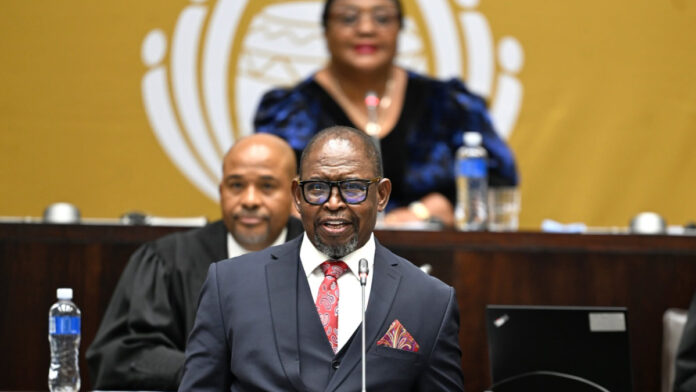
Finance Minister Enoch Godongwana said National Treasury had received broad support for reforms aimed at improving the tracing of beneficiaries and reuniting unclaimed assets with their rightful owners. He was speaking when he tabled the 2026 Medium Term Budget Policy Statement in October.
Godongwana added that the government would undertake further technical work on the institutional, legal and operational arrangements required to support a phased implementation of the framework. Draft legislative amendments are expected to be introduced in 2027.
Single portal and economies of scale
A centralised administration system could strengthen tracing and provide a single portal for claims and enquiries. It could also support economies of scale in the administration and investment of unclaimed assets, subject to appropriate governance and safeguards.
The framework also addresses governance concerns. There have been instances where tracing was outsourced and subject to “tracing fees” that were not consistently regulated in respect of governance, timelines or pricing.
CPD to handle custody and investment
The framework also envisages transferring the unclaimed funds from financial institutions to the Corporation for Public Deposits (CPD), a subsidiary of the South African Reserve Bank (SARB) which manages public deposits from various governmental entities.
By law, the CPD may invest funds received from the public sector in non-market investments at the SA Reserve Bank and “other permissible investment instruments.”
Moving the fund to the CPD would divide the burden of administering the money and locating its beneficiaries. The CPD will provide custody and investment functions, leaving the central administrator to focus on data, tracing, claims and customer service.
Transferring the funds, however, would require a legislative change or the necessary approval from the Minister of Finance under the CPD Act.
R88,56 billion may be an understatement
Although R88,56 billion appears to be a large amount, the true figure may be much higher. The Financial Sector Conduct Authority (FSCA) said in a 2022 discussion paper that the lack of a common understanding of what constitutes an unclaimed asset, together with a lack of reliable and trusted data, meant the total could be higher.
Consumer education and implementation risks
Besides establishing a central administrator, the framework identifies consumer education as a critical enabler in reducing the accumulation of unclaimed assets.
“Targeted awareness initiatives can contribute to limiting growth in both the value and number of unclaimed accounts, while improved consumer engagement may encourage individuals to maintain up-to-date personal records with financial institutions and to actively pursue outstanding claims,” the framework states.
It also warns that implementation risk related to operational complexity must be well managed. “Migrating unclaimed assets and associated records from multiple institutions into a centralised system may present challenges, particularly where records are incomplete, inconsistent or outdated.”