






SA needs more capital and better places to put it
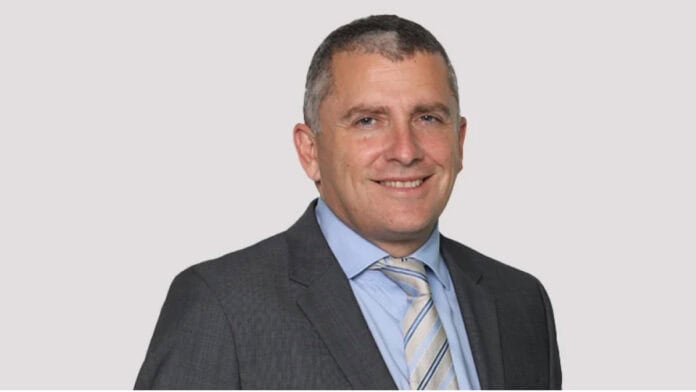
Old Mutual Chief Executive Officer Jurie Strydom says raising investment will not be enough to lift South Africa’s growth rate unless the country also improves how effectively capital is converted into productive economic activity.
South Africa needs more investment to lift economic growth, but increasing the amount of capital alone will not be enough. The country also needs to get more economic output from every rand invested.
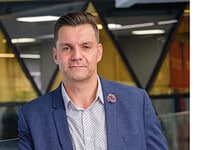
Speaking at the third Old Mutual Thought Leaders Forum, held at the Marriott Hotel Melrose Arch in Johannesburg, Old Mutual Chief Executive Officer Jurie Strydom said this was the central implication of new research by Old Mutual Corporate. “South Africa has spent years debating how much growth we need and how much investment it will take to get there. We also need to ask what happens to a rand once it is invested. More capital matters, but it only changes the growth trajectory if it adds productive capacity.”
The research, Old Mutual Corporate: Retirement Saving, Capital Formation and Economic Growth in South Africa (Sept 2026), produced through a research partnership with Professor Adrian Saville of GIBS and Boundless World, finds that South Africa invested an average of about 14% of GDP over the five years to 2025, compared with roughly 22% for the average economy.
Saville says the international evidence leaves little room for ambiguity. “If you do not have elevated saving and investment, you will not get economic growth. Full stop.” Across the countries studied, he says, there was not a single example of an economy moving from poor to prosperous without materially higher saving and investment.
The research also finds that about 93% of South Africa’s fixed investment is financed from domestic saving, making the country’s capital base an important constraint on how much it can sustainably invest.
But Saville argues that the quantity of capital is only half of the equation. The second question is how effectively that capital is deployed. In his presentation, he reduced the investment challenge to two questions: how much a country invests and how well it invests.
On that second measure, South Africa has substantial ground to recover. The research estimates that the country currently needs about R14.50 of investment to generate one additional rand of output, compared with roughly R3 to R5 in the most capital-efficient, fast-growing economies in the study.
More money alone will not solve the problem
The research models what happens when South Africa improves the quantity of investment without changing the efficiency with which capital is deployed.
Increasing investment from around 14% of GDP towards the 30% achieved by high-saving economies, while leaving capital efficiency unchanged, lifts modelled growth from roughly 1% to about 2%.
Improving capital efficiency alone gets growth closer to 3%.
When higher investment and improved efficiency are combined, however, the model produces a substantially stronger outcome, including a 6% annual growth scenario. “A larger pool of capital is necessary, but it is not sufficient. If that money simply moves into existing assets without adding productive capacity, we have not solved the growth problem. The test is whether investment creates the infrastructure, businesses and productive assets that allow the economy to do more.”
Saville makes the same point more simply. “The investment needs to have impact.” For South Africa, that means increasing the capital available for investment while also improving the ability of the economy to turn that capital into productive assets.
Capital needs investable opportunities
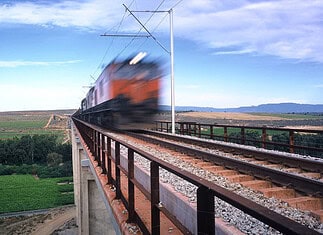
The research points to electricity transmission, water systems, rail corridors and ports as examples of long-duration assets that can improve economic capacity and productivity.
Strydom acknowledged the progress being made through the Presidency to strengthen South Africa’s infrastructure pipeline, including through Infrastructure South Africa and efforts to improve how projects are planned, prepared, financed and delivered.
“This is important progress. The next step is to convert more of that pipeline into projects that are commercially credible and investable. South Africa has substantial pools of long-term capital, but that capital can only be deployed where projects can stand on their own merits.”
These types of assets can be well matched to long-term institutional investors, including retirement funds. But the need for infrastructure does not, on its own, make a project investable.
Projects still need credible economics, appropriate risk allocation, strong governance and the ability to generate returns that justify committing capital over long periods.
Strydom said the fiduciary responsibility of investors must remain central. “Retirement capital belongs to members. The standard cannot be lowered because the country needs infrastructure. The opportunity is to create projects that can compete for that capital on their own merits.”
Too few projects reach the point where long-term investors can commit to them. Better project preparation, clearer risk allocation and stronger governance are therefore as important to the growth equation as the availability of capital itself.
Build the pipeline
Strydom said the next step is to improve the quality and depth of the investment pipeline available to long-term investors. “Capital follows opportunity. The public and private sectors need to create projects that are properly prepared, governed and commercially credible. Investors then have a responsibility to assess those opportunities rigorously and back them where the case holds. If we can increase the capital available and improve what that capital finances, we give South Africa a much stronger foundation for growth,” he concludes.