











Protecting Municipal Pump Motors & Reducing Unplanned Downtime
Municipal water infrastructure depends on pumps operating when they are needed.
From water treatment plants and wastewater pump stations to boreholes, booster systems and flood-control pumps, an unexpected motor trip can interrupt operations, increase maintenance pressure and create knock-on problems elsewhere in the system.
But pump downtime is not always caused by the pump itself.
Electrical conditions, changing process loads, damaged cables and inadequate motor protection can all contribute to repeated trips and premature motor failure.
Understanding these risks is the first step toward improving reliability.
Explore Municipal Motor Protection Solutions
Dry Running Can Damage Pumps Faster Than Expected
Many pumps rely on the fluid they are moving for cooling, lubrication or both.
When water levels fall, a pump continues running after a sump has emptied, the motor and pump may continue operating without the conditions needed for safe operation.
For submersible and dewatering pumps, loss of surrounding water can cause heat to build up quickly. The South African pump research specifically identifies overheating and dry-run conditions as common risks and notes the use of underload protection to detect these situations.
What to consider:
Use appropriate level monitoring, underload protection or process controls to identify abnormal operating conditions before prolonged dry running causes damage.
Learn More About Pump Protection for Water Treatment Systems
Overload Is Often a Symptom, Not the Root Cause
A motor drawing excessive current may be telling you that something else has changed in the system.
Possible causes can include:
- Pump blockage
- Increased mechanical load
- Bearing deterioration
- Incorrect pump operating point
- Process changes
- Voltage problems
- Increased solids or debris
Simply resetting a trip without investigating the underlying condition can allow the same problem to return.
For municipal teams, repeated overload trips should therefore trigger fault diagnosis, not just a restart.
Visit the NewElec Motor Protection Knowledge Hub
Phase and Voltage Problems Can Reduce Motor Life
Municipal pump motors often operate for long periods, which makes stable electrical supply particularly important.
Conditions such as:
- Phase loss
- Current imbalance
- Undervoltage
- Overvoltage
can increase motor heating, reduce efficiency and contribute to premature insulation failure.
The danger is that these conditions may develop gradually and remain unnoticed until the motor trips or fails.
A well-designed motor protection strategy should therefore monitor more than current alone.
Explore NewElec Motor Protection Relays
Earth Leakage Can Be an Early Warning of Electrical Deterioration
Earth leakage occurs when current takes an unintended path to earth.
In municipal pumping environments, possible causes include deteriorating insulation, damaged cables, moisture ingress or developing motor faults.
Submersible pumps introduce an additional concern because damage to cable insulation or seals can allow water ingress and eventually lead to electrical failure. The pump research identifies cable damage, insulation faults and water ingress as important failure modes in these applications.
Appropriate earth leakage and earth fault protection can help identify these conditions before they escalate into more serious equipment damage.
Read About Municipal Earth Leakage Protection
Download the GA Series Earth Leakage Relay
One part of this broader protection strategy is earth leakage protection.
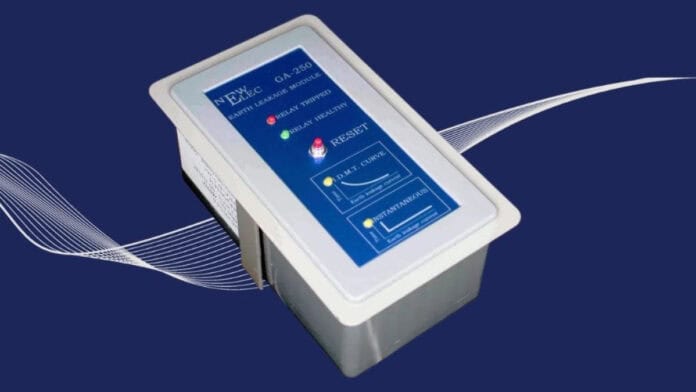
The NewElec GA Series Earth Leakage Relay is designed for earth leakage and earth fault protection and incorporates harmonic suppression characteristics for both high-kilowatt direct-on-line motors and Variable Speed Drive applications.
The GA Series provides:
- Earth leakage and earth fault protection
- Sensitivity options from 30 mA to 1000 mA
- Instantaneous or IDMT trip selection
- Harmonic suppression
- Fail-safe or non-fail-safe configurations
- Latching or non-latching trip options
For municipal pump systems, the GA should be considered as the earth leakage protection layer within the broader motor protection strategy rather than as a replacement for overload, dry-run or phase protection.
Download the GA Series Earth Relay Comparison Guide
A Practical Municipal Pump Protection Checklist
When reviewing a critical pump motor, ask:
- Is the motor protected against overload?
- Can the system detect dry running or underload?
- Are phase-loss and imbalance conditions monitored?
- Is voltage protection required?
- Is earth leakage protection correctly coordinated?
- Can technicians identify why the last trip occurred?
- Are VSD-driven motors protected for their actual electrical environment?
- Does the protection match the application rather than simply the motor size?
The objective is not to add unnecessary protection.
It is to make sure that each critical pump has the protection appropriate to the risks it actually faces.
Explore NewElec’s Municipal Protection Solutions
Need Help Selecting Protection for a Municipal Pump?
Every water treatment pump, wastewater motor, borehole or dewatering application operates under different electrical and process conditions.
NewElec’s technical team can help determine which combination of protection functions is appropriate for the application.