








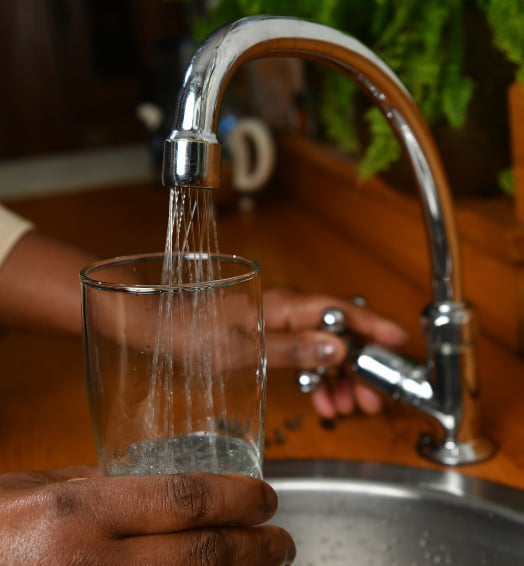
The City of Cape Town is calling on residents and businesses to use water wisely this summer and to fix leaks, so we can collectively keep our usage under 950 million litres per day (MLD). If we use more than this target this summer, followed by another below average rainfall next winter, the City may have to implement water restrictions by next summer. Wise outdoor water use, fixing leaks and complying with permanent regulations are key ways to save.
‘There is no immediate cause for concern about water security in Cape Town as our dam levels are currently about 73%. However, based on this year’s below average rainfall, the City has decided to set a proactive water savings target until the next rainy season.
‘We believe this is the responsible step to take now- an early call for Cape Town to collectively work towards using less than a target amount of 950 MLD to reduce the risk of restrictions at a later stage.
‘Using water wisely also helps us maintain the supply in instances of prolonged/heavy periods of load-shedding or when maintenance work is being done on bulk infrastructure. At times, pipelines and reservoirs need to be closed for maintenance and water has to be rerouted from other parts of the water supply network, which causes lower water pressure in some areas. Wise water usage helps maintain supply for longer in these instances,’ said Councillor Siseko Mbandezi, the acting Mayoral Committee Member for Water and Sanitation.
The way forward
The requirement for water restrictions from the Western Cape Water Supply System (WCWSS) is usually assessed after the end of the winter rainfall season, which is the end of October. The City and other water users in the WCWSS met with the National Department of Water and Sanitation (DWS) recently to discuss the anticipated municipal and agricultural water use and the implications of the well-below average rainfall this past winter. The outcome from National DWS was that no water restrictions will be implemented at this stage. However, they have called for a voluntary reduction of 10% from all WCWSS users. Cape Town will achieve this as long as we stay below our 950 MLD target.
Going forward, the Water and Sanitation team will continue to monitor water usage and dam levels very closely. Historically, it is primarily the outdoor use of water in hot summer months which drives peak water usage especially garden irrigation and the top up of swimming pools.
‘Last summer, usage exceeded 1000 million litres per day (MLD) a few times during heat waves, and this took us back to the kind of usage last seen before the drought crisis of 2016 to 2018 period. We are already seeing usage starting to spike in recent weeks because of the warmer weather, rising well above the 900 MLD mark. We have journeyed together to save water before and we have no doubt that Cape Town will work together again to stay below the target.
‘During this time, the City’s Water and Sanitation Directorate will continue with its own efforts to reduce water wastage by preventing or addressing burst pipes and leaks through its programmes such as leak detection, annual pipe replacement and pressure management.
‘The City will also continue to implement our long-term New Water Programme that aims to bring 300 million litres of extra water a day online by 2030. This includes diverse sources such as desalination, water reuse and groundwater via aquifers, which will be key to Cape Town’s reliable supply as the City navigates uncertain rainfall and future drought. Diversifying our water sources will reduce the City’s current dependence on rain-fed dams as our main source of water. Over the next three financial years, the City will be investing about R2,05 billion in new water sources, which is progressing well. The City has already invested R1,55 billion in this programme.
‘The City is also contributing R50 million to a partnership coordinated by The Nature Conservancy that clears thirsty alien invasive plants so that more water reaches our dams in the Western Cape Water Supply System. Over 55 billion litres of water – about two months of water for Cape Town – were being lost yearly to invasive plants such as pine, gum, and wattle trees. Experts estimated that, if not addressed, this loss was set to double to 100 billion litres of water annually within 20 years. This is the most cost-effective supply intervention we have as part of the diverse mix of sources we’re bringing online,’ said Councillor Mbandezi.
What residents and businesses can do to help
- Check for and fix leaks on your property.
- Know what the permanent regulations say about aspects such as pools, gardening, vehicle cleaning and other aspects, and do the right thing.
These are some of the regulations that are in place at all times:
Ø Hosepipes used for watering or washing vehicles, boats and caravans (when permitted) must be fitted with a controlling device such as a spray nozzle or automatic self-closing device.
Ø Watering is only allowed before 09:00 or after 18:00 (to avoid evaporation losses in the heat of the day). This applies to watering/ irrigation with municipal drinking water, and is also recommended for alternative water e.g. borehole and well-point water.
Ø All swimming pools must be covered by a pool cover to avoid evaporation when not in use.
- For more details visit: https://bit.ly/3DSuNcband http://www.capetown.gov.za/waterregulations
‘Residents and businesses are reminded to be water wise at all times, and even more so in the hot summer months to come. Water is a precious resource that should not be wasted. It is also important, that as the City transitions to being water sensitive, that water is used wisely. These principles are embedded in the City’s Water Strategy and Water By-law and are in effect at all times, even though previous water restrictions were lifted from 1 November 2020.
‘There are useful guidelines on the City’s website to help residents take simple steps to find and fix leaks on their properties. When residents and businesses have the necessary information to monitor usage, identify leaks and save water, they can make informed decisions to help prevent wasting water,’ said Councillor Mbandezi.