









Data centre water use misunderstood, says Equinix as Cape
Town debate grows
Data centre water use misunderstood, says Equinix as Cape Town debate grows DBSA says there might be underinvestment in data centres as “the market continues to trail the demand” for them.
US based data centre operator, Equinix says there is a misconception about how much water data centres consume. The company made news after acquiring land in Cape Town for the possible development of a data centre there in future. Equinix South Africa MD Sandile Dube says the group has no immediate plans to develop a facility in Cape Town, but this has not stopped discussion about how a data centre would affect electricity consumption and water usage in the region. Data centres are seen as key economic drivers for cloud-based computing services and AI, but there are growing concerns about their resource consumption, especially in a water-scarce region like South Africa and the Western Cape in particular. The debate has led the South African Human Rights Commission (SAHRC) to invite the public, civil society and the sector to make written submissions on the implications of the rapid expansion of data centres in the country. A report by the Development Bank of Southern Africa (DBSA) noted that “data centres consume large volumes of water for electricity generation if sites are independently powered, as well as for cooling servers.”
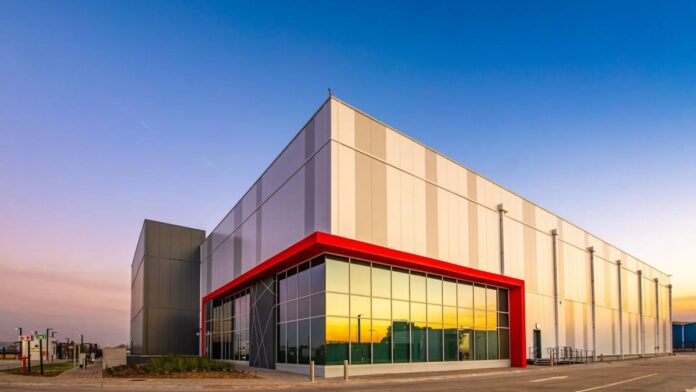
JN1 closed-loop water system filled once, says Equinix SA MD Dube says there is a misconception about how much water data centres actually consume. Equinix, for example, uses a closed-loop water system at its flagship R7.5 billion Johannesburg data centre (JN1) in Germiston, where it is filled with water effectively once. “So you actually fill that water system up with water once, and that’s it. You never have to fill it up again,” he says.
Cape Town land buy: no immediate data centre development planned On the Cape Town land acquisition, Dube says an unfortunate perception was created that the group did not follow due process. This, he says, is not true, as Equinix works closely with all levels of government and local regulators when setting up data centres. Overall, he says he is very happy with the state support he has received for data centre development. “We’re quite privileged in South Africa to have a government willing to enable data centre operators to operate in this market.”
South Africa lacks unified data centre rules as EU and California tighten reporting In South Africa, however, there is no one set of standards and regulations when it comes to governing the resources used by data centres. The European Union (EU) regulates data centres primarily through the Energy Efficiency Directive (EED), which mandates annual energy performance reporting for facilities with an IT power demand of 500 kW or higher. Last month, California passed a seven-bill package that requires data centres to report on water, electricity, and land use. When it comes to power usage at JN1, Data Centres cannot physically run only on renewable electrons at all times. This has seen Equinix purchase renewable energy certificates, contracts, or credits to match 100% of the facility’s total electricity consumption. JN1 uses 4 MW of power, but there are plans to expand the facility where it will eventually consume 20 MW.
Heat reuse could power schools and pools, says Dube Dube said he wishes South Africa had the infrastructure to reuse the heat generated by data centres in the same way some of Equinix’s facilities around the world do. “This heat reuse could power schools or communities. In Europe we have used data centre heat for pools.” Though there is much debate about the intense resource usage of data centres, Dube says they make a notable but not separately measured contribution to the economy. “The contribution of our sector is continuing to grow year on year. Unfortunately, we don’t measure the contribution of our sector in isolation.”
DBSA warns AI demand will outpace data centre investment The DBSA report said there might be underinvestment in data centres as “the market continues to trail the demand” for them. It said that as AI adoption gains momentum, the need to process and store AI workloads in data centres will drive demand for more facilities. “AI workloads consume more power than other IT workloads and require higher rack densities. It will be necessary for the local data centres to evolve by upgrading their existing infrastructure and expanding to accommodate the AI workload requirements,” the report said. It said another factor exacerbating the shortage of data centre space is growing demand for digital services. South Africa is experiencing strong growth in internet usage and cloud services, outpacing the development of data centre infrastructure. This, however, is recognised by both the government and the private sector, with new investment being committed to expanding and upgrading existing facilities and developing new data centres.