











South African clothing manufacturers compete with imports
By Tarryn-Leigh Solomons
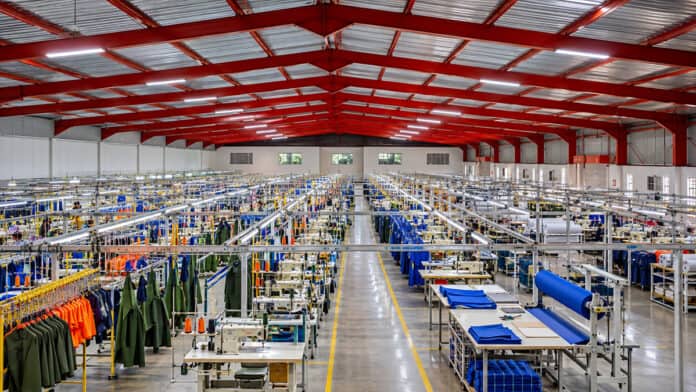
South African clothing manufacturers are using smaller production runs, shorter lead times and tighter quality control to compete with cheaper imports.
The government’s Retail, Clothing, Textile, Footwear and Leather Master Plan aims to increase local procurement from 45% to 65% by 2030. This would lift its value from R32 billion to R66 billion and support a target of 330 000 jobs across the value chain.
A 2024 progress report found that major retailers had bought 371 million more units from local manufacturers over five years, a 51% increase on the baseline. More than 20 000 jobs were created during the period.
Government provided R2.5 billion in industry support, while the Industrial Development Corporation supplied R4.4 billion in loan capital to improve productivity and meet demand.
Factories still have room for additional orders. Stats SA’s February 2026 figures placed production-capacity utilisation across textiles, clothing, leather and footwear at 70.8%, down slightly from 71.1% a year earlier.
Imports retain a strong hold
Imports remain the biggest challenge. ITC Trade Map data shows that South Africa imported about US$480 million in knitted clothing and US$440 million in non-knitted clothing from China in 2025. China supplied 46% and 40% of the respective import categories.
Retailers are also operating in a difficult consumer market.
Rory Kutisker-Jacobson, portfolio manager at Allan Gray, said in a recent market analysis that no listed clothing retailer had recorded a share-price gain this year.
Mr Price was down 7%, while The Foschini Group had fallen 43%. Pepkor and Truworths traded between those two extremes.
Cash-strapped consumers have shifted towards value, increasing pressure on retailers to control stock and limit markdowns.
Local production carries a higher cost
Bruce McMurray, general manager at Jockey South Africa, said about 95% of the company’s garments were manufactured locally through Ninian & Lester in KwaZulu-Natal. The figure has remained stable over the past two years.
Jockey has manufactured in South Africa for 75 years, but McMurray said local businesses still had to contend with raw-material costs, limited access to specialised fabrics and trims and pressure on retail prices. “The conversation needs to move beyond price alone,” he said.
Local production gives manufacturers closer control over quality and allows them to respond faster when demand changes. It also makes it easier to develop clothing suited to South African consumers.
Celeste Burger, founder of Pretoria-based Sista.Love, said all its garments were cut and sewn by the company’s own team at its Garsfontein studio. Its fabrics include both local and imported material.
Burger previously outsourced production to cut, make and trim operations, but moved the work back in-house to maintain quality.
Sista.Love produces three or four staple lines and limits most designs to between six and 15 garments.
“For a small brand, the challenge is making the numbers work at low volumes,” Burger said.
The business has also moved away from paying seamstresses per construction task. It now pays steady salaries and keeps its designs simple enough to support the model.
Smaller runs cut stock risk
Burger sees the strongest opportunity in smaller batches, pre-orders and clothing made around customers’ measurements.
This reduces waste and limits the amount of money tied up in unsold stock. The company’s wash-and-wear Fuss Free Collection was developed around demand for practical clothing that requires no ironing.
McMurray sees further growth in everyday clothing and athleisure. He said closer planning between retailers and factories could improve forecasting and align production with customer demand.
Local orders may cost more per unit, but faster replenishment and smaller runs can reduce inventory risk.
That could become the sector’s strongest argument as retailers decide whether to place their next orders locally or offshore.