












By Diane Silcock
LITHIUM-ION batteries are part of our daily lives. They are used in solar power backup storage, inverters, forklifts, pallet trucks, small industrial robots, electric vehicles, and more personal items include cellphones, tablets, laptops, electric toothbrushes, tools, even vaping devices.
South Africa is one of the leading consumers of inverters in the world. Five million have already been imported into the country and that is just one particular brand of inverter. This is according to Anthony Schewitz, regional director (Highveld region) of the Electrical Contractors’ Association of SA (ECA SA), speaking at the Fire Protection Association of Southern Africa’s InFIReS seminar held in Midrand on 12 June 2024.
He says, “Lithium-ion batteries have a very scary phenomenon, as the main risk around them is what is known as thermal runaway. It occurs when a lithium-ion cell enters an uncontrollable, self-heating state and it starts the cycle in the next cell and the next. Added to that, there might be a secondary explosion formed which will fill the environment with hydrogen which is extremely volatile. An example is a solar installation in a homeowner’s garage. Once the battery is alight, as soon as there is enough hydrogen in the air, you have a bomb.”
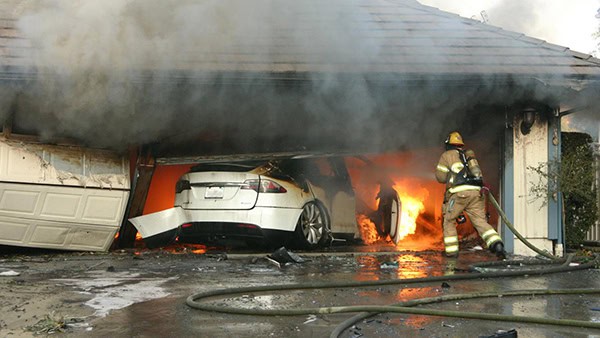
It is not unexpected, therefore, that fire departments globally are grappling with a surge in fire incidents linked to lithium-ion battery-powered devices.
“Fires from lithium batteries have very different fire behaviour to what we are used to,” says Willem Venter of Group Insurance – also a speaker at the conference. “The causes of lithium battery fires include electrical short-circuit, mechanical damage, overcharging, faulty design and substandard manufacturing.”
At the conference, Jasmine Jansen of the City of Johannesburg’s Emergency Management Services, expressed that firefighters in South Africa need to be upskilled and equipped to deal with the types of fires caused by lithium-ion batteries. Responsible reporting of fires in so far as informing the fire department of the type of fire, is vital to ensure firefighters come prepared.
Correct location of lithium-ion batteries is crucial for safety
In the interest of safety, Venter is proposing that, as companies move over to lithium battery forklifts and reach trucks, they construct a dedicated battery bay or charge the batteries outside the building.
International standards provide guidelines on where to store batteries but South Africa is falling short in addressing this important issue as South African National Standards have not been updated to adequately address safety issues.
“From a local authority perspective,” says Jansen, “by-laws need to be reviewed to ensure the safe storage and use of lithium-ion batteries, to protect lives and property.”
Schewitz indicates that the ECA SA has been engaging with all manufacturers to devise an electrical standard that adequately addresses battery location and associated issues.
He stresses that fire risks can be mitigated through correct location, mounting, protection, inspection and maintenance, adequate risk management, and use of qualified installation personnel.
Venter succinctly concludes: “Knowledge must be shared, awareness must be made, people must be trained.”