









ASP Fire stresses fire safety for above-ground petroleum storage facilities
ABOVE-ground storage tanks (ASTs) play a critical role in the handling of petroleum products, particularly in refineries, fuel depots, and bulk distribution hubs. However, their very design and function mean that they present some of the highest fire risks in the energy and petrochemical sectors. ASP Fire, a leader in fire-risk management and safety engineering, is emphasising the importance of specialised fire protection strategies to safeguard facilities, communities, and the environment.

“Unlike underground systems, above-ground tanks are directly exposed to environmental conditions, mechanical damage, and operational hazards,” explains ASP Fire CEO Michael van Niekerk. “This exposure, combined with the inherent volatility of fuels, makes them highly vulnerable to ignition sources. Once ignited, petroleum products stored in bulk have the potential to escalate a small incident into a large-scale fire or explosion.”
Effective protection of AST facilities requires a combination of compliant engineering design, specialised suppression systems, and strict operational controls. South African standards such as SANS 10131, together with international codes from the National Fire Protection Association (NFPA), provide detailed guidelines on tank spacing, bund wall construction, emergency venting, foam application rates, and fixed versus mobile suppression options.
Fire scenarios at AST sites often involve complex interactions between heat, vapour release, and structural integrity.
“If the tank shell is exposed to prolonged radiant heat, there is a risk of boil-over or structural collapse, which can spread burning fuel over a wide area. That is why a properly engineered fire protection system must be in place, not only to detect and suppress flames, but also to prevent escalation,” notes van Niekerk.
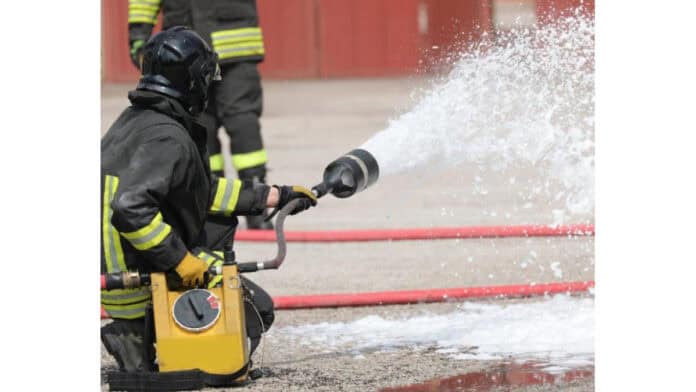
ASP Fire’s approach integrates risk assessment, hazard modelling, and system design tailored to each site’s configuration. This includes evaluating the placement of tanks, the volume and type of petroleum stored, ignition probability, and the adequacy of firefighting resources. The company also focuses on ensuring emergency response planning is aligned with the technical realities of AST fires, which often require high-capacity foam delivery, cooling water systems, and coordination with local fire authorities.
“Every above-ground storage facility has unique risks depending on its layout and operating conditions,” van Niekerk concludes. “Our role is to combine technical expertise with practical solutions that deliver real protection. Fire safety in petroleum storage is non-negotiable. It is the foundation of operational continuity and community safety.”
For more information, connect with ASP Fire on social media and visit www.aspfire.co.za/