











Commercial washroom standards: The overlooked brand risk
How washroom standards quietly shape trust in Cape Town’s commercial and hospitality buildings
By Charl Broodryk, Director at Nuwkem Hygiene, creators of Ticra®
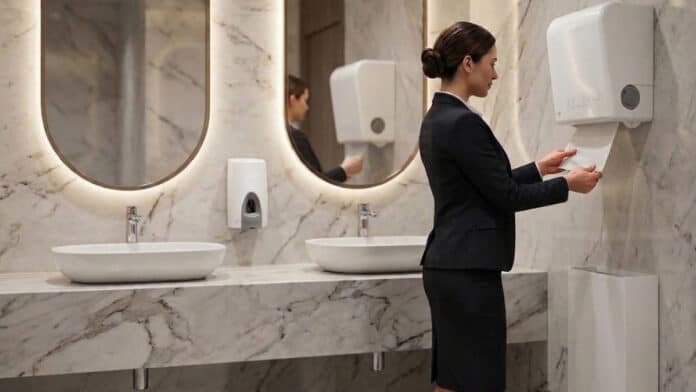
IN property and business, mastery rarely shows only in the brochure or the lobby. Buildings send signals constantly, and some of the strongest are formed in places leadership seldom visits. The washroom is one of them. A visitor steps in alone, forms a judgement in seconds, and carries that impression back to their view of the organisation as a whole.
Cape Town’s hotels, Waterfront retail, professional offices and commercial buildings invest heavily in reception, branding and client experience. The washroom often remains one of the least deliberately managed parts of the same building. That gap is not a small facilities detail. It is an unmanaged brand moment.
Hygiene is how the brand is felt
When a washroom is neglected, users read it as a lack of care about detail. When it is clean, stocked and functional, it works the other way: a practical signal that the organisation can be trusted with larger things. Perception research supports that reading. A major global survey on commercial restrooms, conducted by MetrixLab across respondents in the United States, Europe and Asia, found cleanliness and hygiene the top concern. Participants agreed that a dirty restroom reflects poorly on the establishment. Among restaurant settings, a large share said they would not, or might not, return after a bad toilet experience.
People rarely march to reception to report a broken dispenser or an empty soap unit. They simply leave, and they talk. In a city that sells experience, professionalism and care, that silent verdict is part of the brand whether anyone has put it on the risk register or not.
The shadow brand in the corridor
Every building has a version of its brand that lives in marketing materials, and another that lives in small, tactile encounters. Jammed dispensers, low-quality paper, missing feminine hygiene provision or soap systems that fail under ordinary use all speak. They tell visitors whether attention stops at the front desk or extends to the rooms people actually use.
That is why washroom equipment is not only a procurement line. It is one of the simplest ways to stop reputation slipping in a space the organisation does not actively host. Users interpret careful management of these encounters as a sign of how the wider building is run.
Managing the moment
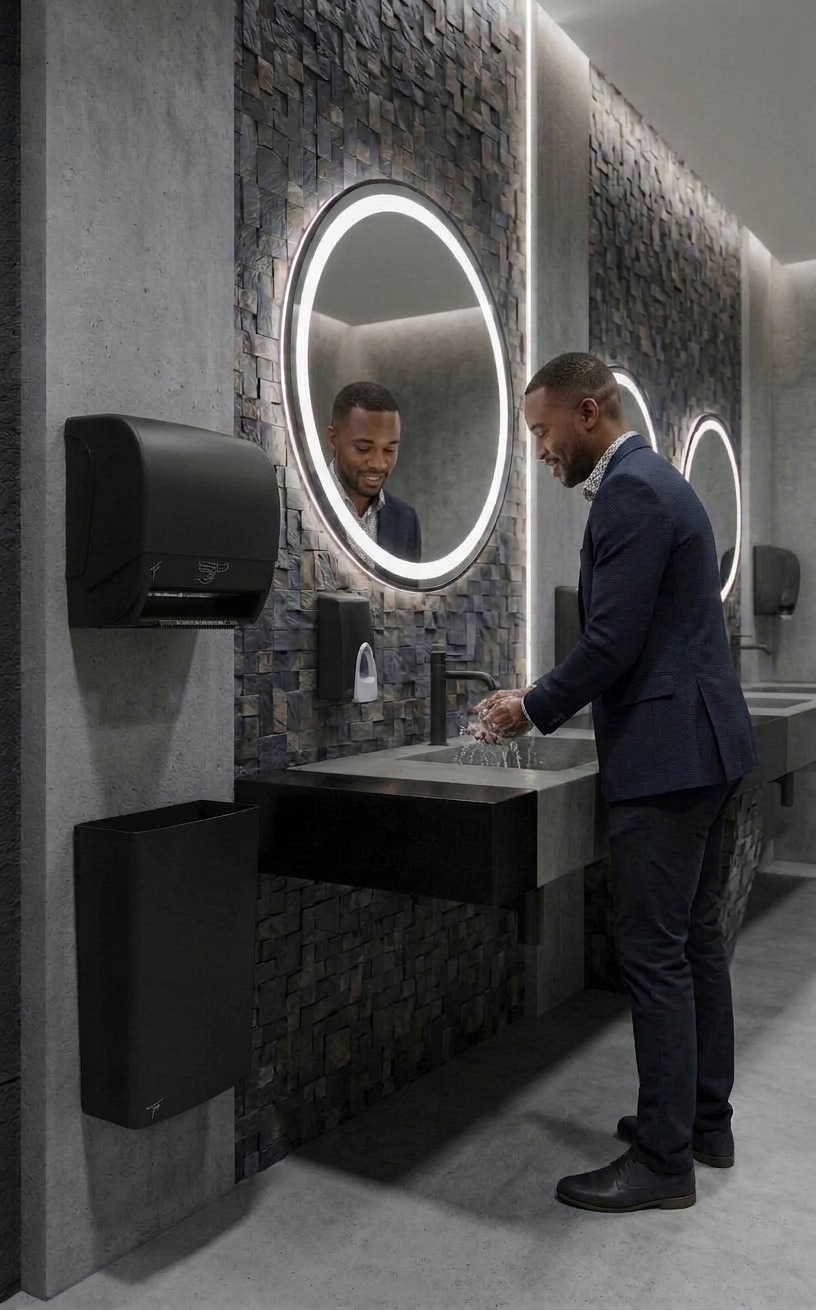
Closing that gap means specifying the washroom with the same intentionality as the spaces that welcome people in. Dispensers and compatible consumables should match real use. Sealed soap systems are preferable to top-up habits that invite contamination. Feminine hygiene belongs in the brief where women use the facility. Finish and durability should suit the environment, whether corporate, lodge, retail or hospitality. Someone should own replenishment and service so standards do not depend on chance.
That is the work Nuwkem does through Ticra across South Africa, with growing support for distributors and end users in Cape Town and the Western Cape. Controlled paper systems, automatic soap and sanitiser, touch-free sanitary disposal and finish ranges suited to commercial and upmarket interiors are built so the quiet encounters in the washroom support the reputation the rest of the building is trying to earn.
Walk it as a visitor would
Reputation is defined by the consistency of the experiences a building provides. A neglected washroom can undermine years of brand investment; deliberate provision can quietly reinforce it. Take a walk through your facilities not only as an owner or manager, but as a guest. Ask what the space is saying about your commitment to detail.
That habit matters every week of the year. It matters even more as Cape Town moves into busier festive and summer periods, when higher footfall will expose every weak point faster. The buildings that treat hygiene as part of brand will not need to advertise it. Guests will simply leave knowing the standards did not stop at reception.