














Lube tip: insights into oil additives
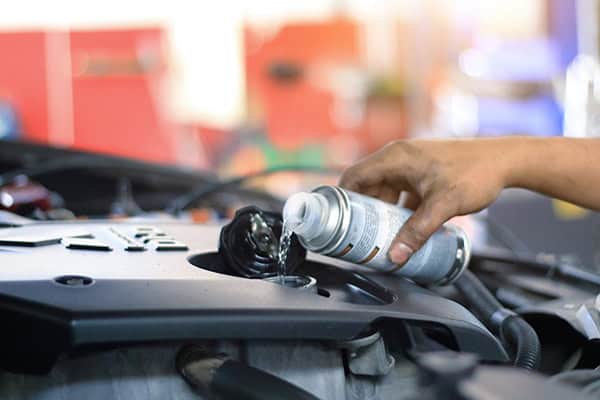
By simply including an additive, an inferior base oil cannot be converted into a premium product. It is illogical to use poor-quality oil on a continuing basis, and attempt to overcome its poor lubricating qualities with some special additive. A far better approach is to determine the manufacturer’s recommendation as to the minimum API service rating required (API is a standard of quality grade for engine oil made by the American Petroleum Association), and then regularly use a blended lubricant of a higher-service classification than originally recommended, if an improvement in lubrication is the objective.

Lube tip: aftermarket oil additives can backfire
Increasing the percentage of a certain additive may improve one property of an oil, while at the same time degrading another. When the specified concentrations of additives become unbalanced, overall oil quality can be affected. Some additives compete with each other for the same space on a metal surface. For example, if a high concentration of an anti-wear agent is added to the oil, the corrosion inhibitor may become less effective. The result may be an increase in corrosion-related problems.
Lube tip: the evolution of oil filtration systems
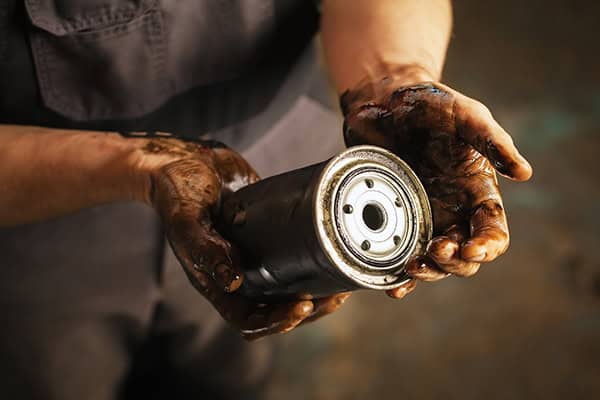
Early automotive engines didn’t use any kind of filtration for the oil. It wasn’t until a patent was granted to Ernest Sweetland and George Greenhalgh in 1923 – for their product the “pure oil later” or “Purolator” – that you could buy an automobile with a full-pressure lubrication system.
It would be many years later before a full-flow oil filter found on today’s vehicles was incorporated.
The 1940s would bring about filtration systems on mass produced vehicles, and the 1960s made oil filter changes much more convenient with the advent of “spin on” disposable filters. Through the next few decades, advances were made in the internal construction and filter media, making the filters much more efficient. Today, all automotive engines, whether gasoline or diesel, come with filtration that is designed to improve oil cleanliness and thus extend the life of that engine.
Lube tip: too much of a good thing
More is not always the right approach when it comes to using oil additives. In many instances, blending more additive into the oil, does not result in improved performance. Sometimes, adding more additive actually causes the oil’s function to deteriorate. In other cases, while the performance of the additive doesn’t improve, the duration of service does, in fact, improve.

Visit www.wearcheck.co.za for more condition monitoring information.