











Why You Should Leave Dry Ice Blasting to Professionals
Dry ice blasting has attracted attention in South African industries where precision and speed matter.
From food processing plants in Gauteng to heavy manufacturing workshops in Durban, more businesses are exploring this cleaning method as an alternative to harsh chemicals and abrasive sandblasting. Reducing downtime has become a priority for South African businesses, particularly in food processing and manufacturing environments.
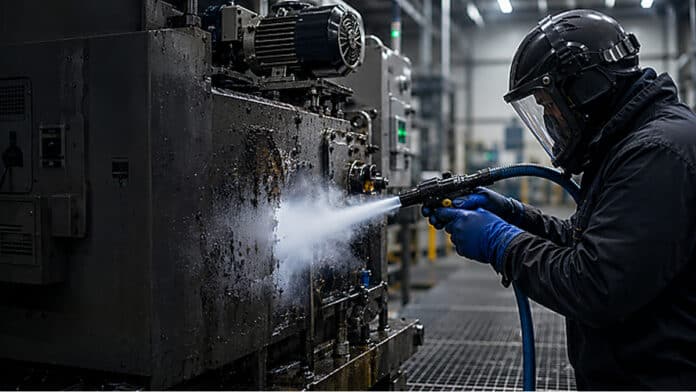
Dry ice pellets are blasted at high speed onto a surface, removing dirt or contaminants without leaving behind water or secondary waste. The process looks straightforward, but dry ice blasting is far more technical and potentially dangerous than many people realize. That is exactly why it should be handled by trained professionals.
Understanding the Risks
Dry ice is solid carbon dioxide stored at extremely low temperatures, around minus 78 degrees Celsius. Direct contact can cause severe cold burns in seconds, while improper handling in enclosed spaces can create dangerous carbon dioxide build-up that reduces oxygen levels.
These risks become even more significant in industrial settings. A poorly ventilated factory floor can quickly become hazardous if operators are not correctly monitoring the air quality. Professional dry ice blasting teams understand how to manage exposure levels while efficiently completing the job.
The blasting equipment itself operates under high pressure. Incorrect settings can damage machinery or crack delicate surfaces. A trained technician knows how to adjust pressure, pellet size and blasting angles depending on the material being cleaned.
The Equipment Is Highly Specialised
Dry ice blasting systems are expensive, complex machines that require technical knowledge to operate properly. The process uses dry ice pellets accelerated at high speed to remove contaminants without damaging underlying surfaces. Along with the blasting unit itself, operators often use compressors and moisture control systems that are specifically designed for industrial cleaning environments.
Many South African businesses are tempted to rent to save money. Unfortunately, this often leads to costly mistakes. Incorrect use can damage production equipment and even create safety incidents that halt operations altogether.
Professional operators bring an understanding of how to clean electrical panels without causing damage and remove contaminants while protecting sensitive components.
Precision is More Important Than People Think
Dry ice blasting is highly precise, and it can clean machinery in place without requiring disassembly, which helps businesses reduce downtime. Achieving that precision takes skill.
In food production facilities, for example, surfaces must be cleaned thoroughly without introducing moisture or residue that could affect hygiene standards. In automotive or mining environments, technicians often work around sensitive electrical systems and high-value equipment.
Professionals know how to adapt the process for different industries and surfaces and their contamination levels. Their expertise protects both the equipment and the people using it.
Long-Term Value for South African Businesses
Hiring professionals often save businesses money over time. Proper dry ice blasting extends the lifespan of machinery and lowers the risk of accidental damage.
Downtime can become extremely costly in South Africa’s competitive industrial and agricultural sectors. A damaged production line or improperly cleaned machine can delay deliveries and increase repair expenses.
Professional dry ice blasting companies help businesses avoid these hidden costs along with providing stronger safety standards and better cleaning results.
Dry ice blasting is a powerful tool that delivers impressive results when handled correctly by professionals such as Dry Ice Blasting Services, but it is not a process that should be underestimated. In the end, leaving it to professionals is the smarter investment.