











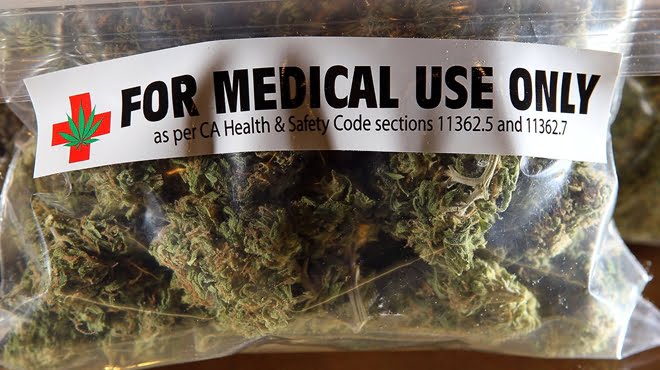
All African nations are capable of cultivating medicinal marijuana to exploit a growing international acceptance of cannabis-based medicines.
The current global market for marijuana products is US$3 billion and is expected to rise to US$56 billion as more countries and US states join the legalisation trend.
African nations are reluctant to get in on the business, with conservative governments fearful of encouraging recreational drug use. Cultivation of a different kind is now a reality with Africa’s first license to legally deal in medicinal marijuana issued by Lesotho.
Lesotho’s government has granted a local subsidiary of the South Africa firm Verve Dynamics the right to cultivate, manufacture, supply, export and transport Cannabis and Cannabis products from Lesotho.
Verve Dynamics’s South Africa operations specialises in medicines manufactured from indigenous plants.
Groundbreaking work was done with Sceletium tortuosum, a succulent herb from South Africa known as Channa, Kanna or Kougoed that has been used as a tranquiliser for centuries.
Jan van Riebeeck and the crew of the Drommedaris were impressed users in 1662. Richard Davies, the managing director of the Verve Dynamics Group, holds the patent to the Sceletium tortuosum-based product Trimesemine™.
Verve has a benefit-sharing agreement with South Africa’s Khoe Khoe community for Sceletium products, and intends to set up a similar community profit-sharing deal in Lesotho for the medicinal marijuana products.
Medicinal marijuana involves the use of all or part of a cannabis plant. The US Food and Drug Administration (FDA), which requires extensive studies involving 100 000 subjects to ascertain benefits and risks of new drugs, has in the absence of such studies never approved medicinal marijuana.
However, 29 of the US’ 50 states as well as the capital district Washington DC do permit medicinal marijuana.
The FDA has approved two medications in pill form synthesised from cannabinoid chemicals. Cannabis is used to treat a wide range of illnesses, from childhood epilepsy to glaucoma. Marijuana reduces inflammation, nausea and pain and is being studied as a control for mental illness and addiction.
“We have been dealing with Afro-botanicals with a medicinal application for the last 15 years. Cannabis has been a product of interest to us for some time due to its medical potential. However, due to the illegality of it in South Africa we have not had access to it,” said Verve Dynamic’s Davies in an interview.
“Based on the work we had been doing in South Africa, we were afforded the opportunity to present our case to the Lesotho government’s Minister of Health. Thereafter, we underwent an intensive six-month due diligence, part of which included a site visit to our South African facility by various departments of Government including Health, Trade and Industry, Tourism and agriculture and the Lesotho police.”
With license obtained, investment began in what will be a R30 million first phase that will employ about 40 Basotho to grow and process cannabis. Good Agricultural Practices and Current Good Manufacturing Practice regulations will be followed as well as Lesotho’s and international medical and narcotic regulations. Once the fields are producing a satisfactory product, they will be processed into finished products in the form of capsules, tinctures, and other medicinal consumables.
“Phase 2 and 3 would be expansion phases based on the market demand for medical cannabis. The greater the demand the bigger these phases would be but we anticipate them being at least 2 to 3 times the investment of Phase 1,” said Davies.
“All staff, as far as possible, will be sourced from Lesotho. Initially some of the manufacturing staff will need to move over from South Africa until we have successfully completed the necessary skills transfer,” he added.
As new markets open overseas, demand will grow along with profit potential. “We will be able to sell product to any country that is legally allowed to buy the product. Our main markets are expected to be North American and the European Union. I’m of the opinion that the revenue potential for Lesotho, as well as the rest of Africa is obvious. Having the ability to deliver a superior product to the international market at a lower than market related price is a really good position to be in,” said Davies.
Lesotho seems to have nothing to lose from the venture, and as the first African country out of the gate in an expanding global business will enjoy the benefits usually reaped by pioneers. Beyond Lesotho, Davies said, “We are of the view that all African countries could benefit from the legalisation of medical Cannabis. Africa, particularly Southern Africa, is rich in the resources required to propagate and produce medicinal plants.”
Lesotho’s sister kingdom, Swaziland, is noted for high-jgrade marijuana, and theoretically a firm may be licensed to produce the otherwise illegal plant under the country’s Pharmacy Act. Royal Swaziland Police Force spokesman Assistant Superintendant Khulani Mamba said in an interview, “It has never happened but someone could seek a license from the Ministry of Health. A board sits to consider applications for producing new medicines in the country.”
Other than that, marijuana is outlawed in Swaziland, and police are obliged to follow current laws on recreational drug use by arresting possessors and destroying marijuana fields.
While marijuana has potential for other industrial uses – clothing, lotions, lubricants, paper, ropes and even bricks and bird seed have been made from hemp/cannabis – worries about recreational marijuana arriving through the Trojan Horse of medicinal marijuana can only be alleviated through stringent regulation, Davies believes.
“When dealing with a consumer good, particularly one that is used for medical treatment, a level of regulation is necessary for the safety of the consumer. There is an ethical responsibility to provide consumers with a predictable and reliable product that is safe and effective. Alcohol is perhaps a good local example of this. You cannot just make a home batch of alcohol and sell it to others. These regulations are for public benefit and safety,” he says.
“Medicinal cannabis can be thought of as the gold rush of our time. Africa can be at the forefront of this industry,” Davies believes.
* James Hall is a Independent Media’s stringer based in Swaziland.