











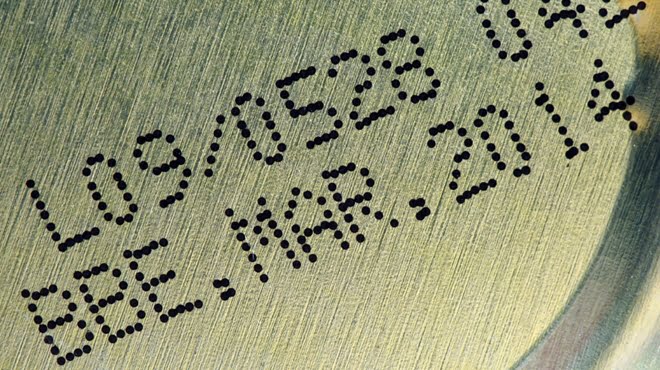
Many consumers are confused by the date code definitions found on food and beverage packaging. What do ‘Best By’, ‘Use By’ and ‘Sell By’ really mean?
According to research carried out by the US Congress, a large number of consumers are misunderstanding these date code definitions and as a result, packaged food is becoming landfill while it is still edible and safe to consume.
The study indicated that confusion around these date definitions has led up to 90% of people living in the U.S. to occasionally throw out food that is still safe and edible. According to the report, wasted food “costs consumers and industry money, squanders important natural resources that are used to grow, process, distribute, and store the food supply of the United States, and represents a missed opportunity to feed the millions of food insecure households in the United States that are struggling to access healthy, affordable food.”
To address this issue, legislation has been proposed in the US to standardise and clarify food labelling in a bid to minimise confusion and unnecessary food waste. This also involves a consumer education drive to support the Bill, if it is passed.
In South Africa, many consumers also find date definitions confusing. At present, here is a reminder of what “Best By”, “Use By” and “Sell By” dates on packaging really mean:
‘Best By’: The date by which a product will no longer retain its ideal quality. This does not necessarily mean that it is not safe to eat.
‘Use By’: Similar to “Best By”, this a date by which the quality of the product will be reduced and may not taste as good as it should. Again, it doesn’t mean that the product is no safe to eat.
‘Sell By’: This is aimed at the retailer and relates to the date by which the shop should remove the product from its shelves. The challenge here for the consumer is that it is not clear how long they should keep the product for once it has exceeded its ‘Sell By’ date. This date is sometimes accompanied by one of the dates above.
Interestingly, none of these labels give absolute clarity on food safety – but are rather indicative of when the product’s quality will begin to change. The goal of the proposed legislation in the US is to let consumers know when food has gone bad and is no longer safe to eat.
Pyrotec PackMark provides more information on quality and safety dates – as well as guides on the most resource-efficient solution for adding dates to packaging, no matter whether coding is onto glass, plastic, cardboard, aluminium or corrugated substrates.