







Traxtion’s R3.4bn bet on rail marks a turning point for South Africa’s reindustrialisation drive
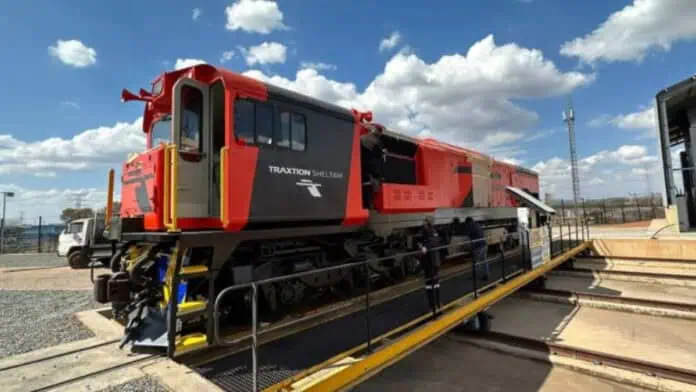
SOUTH Africa’s embattled freight rail sector received a powerful vote of confidence this week as Traxtion unveiled a R3.4 billion rolling stock investment — the single largest private freight rail commitment in the country’s history.
The African Rail Industry Association (ARIA), long a champion of rail reform, hailed the announcement as a breakthrough moment for reindustrialisation and a validation of “the power of local.”
A bold pledge in a sector hungry for renewal
Traxtion’s investment spans R1.8 billion for 46 locomotives and R1.6 billion for freight wagons, an injection that directly targets South Africa’s freight capacity shortfall.
“This milestone required immense resilience and belief,” said Traxtion CEO James Holley. “Years ago, when the idea of a competitive rail environment felt far off, ARIA’s Mesela Nhlapo stood as a brave voice pushing for reform. Today proves that advocacy mattered.”
The investment will address roughly 5% of the current national freight capacity gap — small in context, but critical for unclogging ports and easing pressure on key economic corridors. Holley stressed that the move is not a challenge to Transnet but a collaborative push to restore South Africa’s competitiveness.
Transport Minister Barbara Creecy echoed the sentiment: private sector capital, she said, is essential to lowering logistics costs and improving environmental performance.
Backing Transnet’s turnaround targets
The Department of Transport aims to lift freight volumes on the Transnet network from 160 million tons to 250 million tons by 2029. The approval of 11 Train Operating Companies (TOCs) in 2025 marked the first major step toward opening the network to new players.
ARIA estimates these operators could collectively move 20 million tons a year — and Traxtion’s new locomotives and wagons will strengthen that early momentum.
Rail as the backbone of beneficiation
The announcement also dovetails with the government’s push for mineral beneficiation and industrialisation.
“We cannot reindustrialise without railways,” said ARIA CEO Mesela Nhlapo. “Traxtion’s investment helps bridge mining and manufacturing — the heart of a value-adding economy.”
Localisation at scale: 60% South African content
Perhaps the most significant impact lies in local manufacturing.
Traxtion’s programme commits to a minimum of 60% local content, with South African suppliers accounting for more than 79% of procurement.
That translates into 662 direct jobs during the build and deployment phases, and a substantial multiplier effect through upstream suppliers.
The investment is also a practical expression of the National Rail Policy White Paper and the DTIC’s rolling stock designation framework, which stipulates local content levels from 55% for locomotives to 80% for wagons. Traxtion’s choice to exceed these thresholds shows, ARIA argues, how private capital can advance industrial policy.
Building a continental rail industry
Traxtion operates across 10 African countries, positioning the investment within the African Union’s Agenda 2063 vision and the trading ambitions of the AfCFTA.
To unlock even greater investment, ARIA is urging the government to expedite the domestication of the Luxembourg Rail Protocol — ratified in January but not yet embedded in South African law. The Protocol offers the legal certainty and financing mechanisms global funders require for large-scale rolling stock investments.
Next steps: regulatory clarity and expanded access
ARIA said it will continue working with Transnet’s Rail Infrastructure Manager on refinements to the Network Statement, the rulebook governing how operators use the national network.
The scheduled release of Volume 4 and the opening of route applications for the 2026/27 timetable are expected to unlock more private-sector participation.
For now, Traxtion’s R3.4 billion injection stands as a rare piece of good news for a sector that has endured years of decline — and a strong signal that South Africa’s rail reindustrialisation project may finally be gathering speed.