













From waste to raw material: Recycled plastics find new commercial markets
By Tarryn-Leigh Solomons
SOUTH Africa’s plastics recycling industry is moving beyond collecting and processing waste, with recycled polymers finding new commercial markets across construction, packaging, household products and manufacturing.
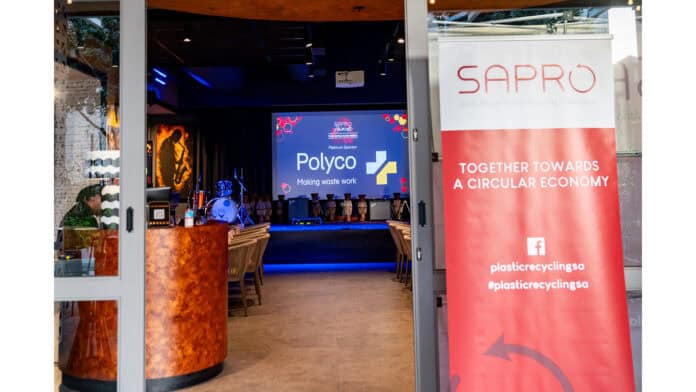
This shift was highlighted at the 2026 South African Plastics Recycling Organisation (SAPRO) Awards in Cape Town, where products manufactured using post-consumer plastics showed how material traditionally destined for landfill can be turned into commercially viable products.
SAPRO General Manager Oliver Bonstein said developing sustainable end-markets for recycled material is critical to increasing recycling rates.
“To give recycled material a fighting chance, you need innovation, companies putting it into new products and into places it hasn’t been used before,” he said.
But collecting and processing more plastic solves only part of the problem. As South Africa’s Extended Producer Responsibility (EPR) framework places greater emphasis on recovering and recycling plastic waste, the industry also needs sufficient demand for the recycled material it produces.
EPR investment supports recycling capacity
Polyco CEO Patricia Pillay said businesses need to adapt as technology, climate pressures and changing global markets reshape their operating environment.
She pointed to more than R100 million in projects approved by Polyco to support businesses in the recycling sector, including investment in infrastructure.
“That’s EPR in action. EPR works,” Pillay said.
Polyco operates an EPR scheme for plastic packaging on behalf of producers, importers, brand owners and converters.
Pillay said supporting recyclers extends beyond recognition through awards and includes responding to infrastructure and operational needs. She also encouraged businesses to invest in research, collaboration and new applications for recycled materials.
Waste finds new commercial uses
The SAPRO Awards demonstrated how recycled plastics are finding applications across different industries.
The overall award went to MAK Plastics for its BOPP Wash Basin, manufactured from 100% post-consumer heavily printed BOPP. The material can be difficult to recycle because of its inks, contaminants and composition, yet the product has already used 960 tonnes of recyclate.
Construction also emerged as an important end-market, with three products manufactured from 100% post-consumer LLDPE receiving Gold awards in the Construction and Building category.
Innovation extended into the wine sector, where the Eco-Flat Wine Bottle, developed by Safripol, Polyoak Packaging and Stellenbosch Vineyards, received the Gold Award for Innovation.
Other Gold winners included the Strata Nova Light in the Creative category, Tuffy Refuse Bags in PCR Demand Champions, and Organics and TRESemmé bottles in Packaging.
The Plush Suede Renew Range lids received the Special Award for Technical Achievement.
From recycling targets to market demand
The products recognised at the awards point to a broader commercial challenge for South Africa’s recycling sector: recovering more plastic will have limited impact if viable markets do not exist for the recycled material produced.
Greater use of post-consumer recycled content in manufacturing can stimulate demand for recyclate, reduce reliance on virgin polymers and keep more plastic in productive use rather than sending it to landfill.
Growing these markets could also strengthen the business case for investment in recycling infrastructure and give recyclers greater certainty that recovered material has somewhere to go.
For South Africa, this presents an opportunity to treat plastic waste not only as an environmental challenge, but as a manufacturing resource with economic value.
The products recognised by SAPRO show that commercial applications already exist across several sectors. The challenge now is to expand those markets and take recycled plastics from individual product innovations into wider manufacturing use, creating more consistent demand for the material recovered through South Africa’s recycling system.