











By Staff Reporter
THE Greater Tygerberg Partnership (GTP) has launched an extensive upliftment programme in its northern suburbs. In co-operation with the private sector, other NPOs, and the City of Cape Town, the GTP has a solid strategy for rejuvenating the City of Tygerberg. The GTP and the City of a Cape Town have a standing MOU – a memorandum of understanding agreement, which they renew every three years.
“We would like to make Belville a go-to zone for businesses and city dwellers, so attracting investors, developers and stakeholders is vital. “I want to inspire the community to act on their own behalf, to reduce waste, to uplift the homeless, and to rebuild an economic hub,” says Warren Hewitt, CEO.
One major aim is to reduce waste to landfill in Bellville, a daunting but important task. The GTP identified schools as positive starting point as they are a microcosm of the broader community, a project which can be reproduce on a large scale.
The GTP has achieved encouraging results through the schools-focused recycling and waste management drive launched in 2019. Key to this process was inspiring young people through education, teaching them about waste and personal hygiene, something they took home to their families.
One of first projects was at DF Malan High School, Meyerton, which has approximately 1 200 learners. This included setting up stations for sorting, recycling, and composting organic waste and by the end of the year had reduced their waste to landfill by 60 percent. They saved money by reducing their municipal bin collection and now earn up to R6 000 a year selling recyclable materials.
Creating employment
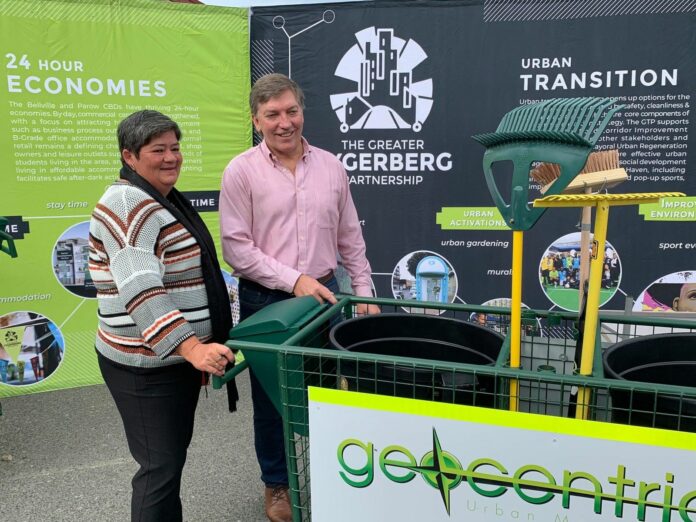
The GTP tackled unemployment in Bellville by training the homeless as waste-pickers in the CBD. Now thirty-eight waste-pickers use locally designed trolleys to collect and sort waste from around 130 businesses, and buy-back waste companies pay them R95 per day for their services.
The pickers can rent a shelter bed nightly for a small fee at the Safe Space, a shelter created by MES (to Mould, Empower, and to Serve), an NPO with a countrywide network.
Organic waste worries
“Our audits on this waste revealed a disturbingly significant amount of toxic waste entering the water systems, posing a serious threat to human health.
One strategy is for the GTP to clean up Bellville by diverting organic waste away from landfills to composting centres. One such project is using premises owned by MES, where the GTP has set up composting systems in order to develop the urban food garden, a healthy food supply or the homeless grown by four waste-pickers.
“We’ve learned much from similar programmes run in Cape Town and now have the know-how and some of the technology we need.”
There is also the potential for waste management companies to use oils and similar end products to create biofuels for industry.
For more information ceo@gtp.org.za