










Wind energy in South Africa faces grid delays despite investment growth
By Tarryn-Leigh Solomons
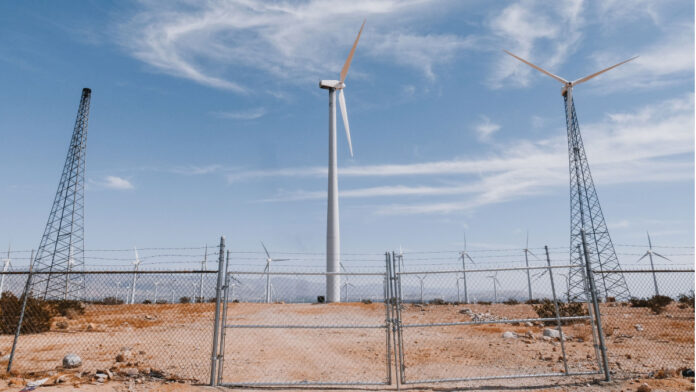
SOUTH Africa’s wind energy industry continues to attract private investment, but limited transmission capacity is delaying projects and threatening opportunities for local manufacturers, contractors and suppliers.
Grid constraints, procurement delays and local manufacturing were among the main issues raised at Windaba 2026, held in Cape Town on 6 and 7 October.
According to the Global Wind Energy Council’s (GWEC) latest Status of Wind in Africa report, the continent had 11.1GW of installed wind capacity by the end of 2025, with another 186GW planned across 259 projects.
South Africa accounts for approximately 4.2GW of installed capacity and remains one of Africa’s largest wind energy markets.
Private investment has also gained momentum as mining companies, cement producers and other large electricity users increasingly turn to independent power producers to secure electricity.
GWEC reported that regulatory reforms have enabled more than 3.3GW of corporate wind projects through power purchase agreements in less than 30 months.
However, the shortage of available grid connections remains a major obstacle, particularly in the Cape provinces, where some of the country’s strongest wind resources are located.
The National Transmission Company South Africa (NTCSA) plans to construct approximately 14 500km of high-voltage transmission lines over the next decade and install 133 000MVA of transformer capacity.
The expansion programme is expected to cost R440 billion, with a funding shortfall of R134 billion.
NTCSA chief executive Monde Bala has called for greater private-sector participation in financing and constructing transmission infrastructure.
Government’s Independent Transmission Projects Programme is intended to attract private investment, beginning with approximately 1 164km of new transmission infrastructure.
However, the programme has experienced delays, with the final request for proposals for the first phase now expected in the second quarter of 2027 following further consultations with seven prequalified bidders.
The delays extend beyond electricity generation, affecting businesses supplying steel, cables, transformers, construction equipment and engineering services.
Uncertainty around construction schedules makes it difficult for manufacturers to plan production, purchase machinery or employ additional workers.
Electricity and Energy Minister Kgosientsho Ramokgopa told Windaba that electricity curtailment was costing South Africa close to R49 billion annually in potential revenue.
Curtailment occurs when electricity generation must be reduced because the transmission network cannot accommodate the available supply.
Government is considering additional battery storage capacity and exporting surplus electricity to neighbouring countries to address the problem.
Under the Integrated Resource Plan 2025, the first new procurement determination will prioritise 4 600MW of battery storage and
5 000MW of gas-to-power, with wind and solar procurement to follow.
Local manufacturing also came under discussion at Windaba, particularly South Africa’s reliance on imported components and the cost of establishing domestic production facilities.
Industrial Development Corporation representative Ian Davis acknowledged that developing local manufacturing capacity would require upfront investment, but maintained that the long-term benefits of local production and employment would justify the expense.
Import tariffs and local content requirements were also debated, with concerns about rising costs and their potential impact on project financing.
The South African Wind Energy Association (SAWEA) reported that more than 800MW of wind capacity had entered commercial operation during 2026, with installations expected to exceed 1GW by year-end.
Wind developers have also contributed to transmission expansion, including the installation of 116km of power lines.
While investment interest remains strong, delays in transmission infrastructure and procurement continue to affect the pace at which projects reach construction.
Manufacturers and suppliers will be watching the rollout closely, particularly those considering additional production capacity to meet demand from the wind energy industry.