

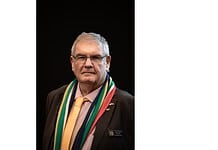










Cape Town Mayor Geordin Hill-Lewis has welcomed the new incentives for households and businesses to install solar generation, as announced in Finance Minister Enoch Godongwana’s national budget. From 1 March 2023, businesses will be able to reduce their taxable income by 125 per cent of the cost of an investment in renewables. Changes to the Bounce Back Loan Guarantee Scheme will guarantee solar-related loans for small and medium enterprises. A new tax rebate incentive will also help individuals recover 25% of the cost of installing rooftop solar panels in the 23/24 tax year up to a maximum of R15 000.
‘Cape Town welcomes the incentives announced for solar PV investments, which will support households and businesses to rapidly scale up power generation. Our message to Capetonians is clear: there has never been a better time to invest in solar. We want as many residents and businesses as possible to help us end load-shedding over time, as the first city in the country to offer cash for excess rooftop solar power. There are no limits, sell us much of your excess power to us as you can,’ said Mayor Hill-Lewis.
Cape Town is set to start paying businesses cash for power before June, while residents can start selling power for cash later this year. The City will add a 25c p/kWh incentive to feed-in tariffs.
Besides paying cash for power, Cape Town is forging ahead with its three-phase procurement for load-shedding protection, with the goal of protecting residents from the first four stages of Eskom’s load-shedding.
A 200MW procurement window for renewable energy concluded last year, with contracts to be awarded later this year following grid integration studies by the Centre for Scientific Research (CSIR).
The second of the three-phase procurement is the ‘Power Heroes programme’, an initiative to pay residents incentives for voluntary energy savings, which will entail automated remote switching off of power-intensive devices at peak times. The “demand response tender” for this programme, launched in October last year, is currently in the evaluation phase, and will also be awarded within the coming months.
The third phase of procurement will be launched in March. This will take the form of a Dispatchable Energy tender, expected to yield around 500MW for Cape Town’s grid. This tender will focus on both renewable energy and dispatchable technologies, such as battery storage and gas to power.
