










Renewable Energy market matures as grid and cost pressures rise in 2026
By Larry Claasen
THE renewable energy market is entering a new phase in 2026 says Discovery Green.
Aside from electricity reforms that will see state owned power utility Eskom being split into three companies that will take over its generation, transmission and distribution functions, efforts to bring in the private sector are also gaining momentum.
Discovery Green said evolving wheeling models, grid constraints and changing cost dynamics are influencing how large energy users source renewable power, said a 2026 industry outlook.
Though the South African Wholesale Electricity Market (SAWEM) is still being developed, maturing wheeling frameworks are already providing large energy users with participation rules, standardised processes across utilities. The rise of trader-led, portfolio‑based models for example has simplified contracting and balance risk are also solidifying wheeling frameworks.
“These developments are expanding access to supply and enabling companies to act now, without relying on future market structures,” says Andre Nepgen, CEO of Discovery Green.
Discovery Green said Trader‑led wheeling has become the default model. Under this model, licensed traders sit between independent power producers (IPPs) and end‑users, coordinating supply and demand across portfolios.
“Trader‑led wheeling is what allows renewable energy to function as a scalable market rather than a collection of independent, bespoke transactions,” Nepgen explains. “Aggregation is what turns renewable energy from a risk into a predictable system that works for business. This evolution marks a critical step in the sector’s maturation, enabling flexibility, resilience and scale that were previously difficult to achieve.”
Though the development of wheeling is a good development for the industry , rising renewable energy equipment cost is something the industry will have to cope with in 2026.
China is doing away with VAT rebate, so most contracts now include “policy adjustment clauses” that automatically hike prices the moment the rebate disappears. The sheer volume of global installations has also strained the supply of the physical materials needed to build solar panels.
Aside from these issues, grid capacity has become the most significant constraint on South Africa’s renewable energy expansion. With 75% of all private renewable applications in either the Eastern, Western or Northern Cape, these areas are grid-saturated as there is nowhere for the power to go.
Though the National Transmission Company South Africa (NTCSA) is introducing congestion curtailment as an interim capacity‑unlock mechanism, allowing controlled output reductions of around 4%, this is a partial solution to a much larger challenge.
Curtailment could enable additional projects to connect, potentially unlocking about 1,580 MW of wind capacity by 2028, but demand for new grid connections continues to outpace the system’s ability to accommodate them.
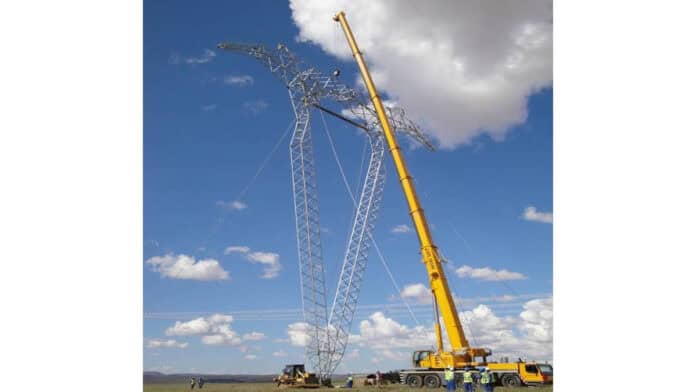
South Africa needs to build 14,500 km of new high-voltage lines by 2034, said Discovery Green. The NTCSA has secured R112 billion for the next five years, but the bottleneck isn’t just money, it’s the speed of execution. To reach this target, we will need to increase construction speed five-fold.
“Grid progress is now as important as price,” Nepgen notes. “A strong resource site alone is no longer sufficient. What matters is whether there is a credible path to connection and a realistic delivery timeline, grid access is fast becoming a competitive differentiator.”