













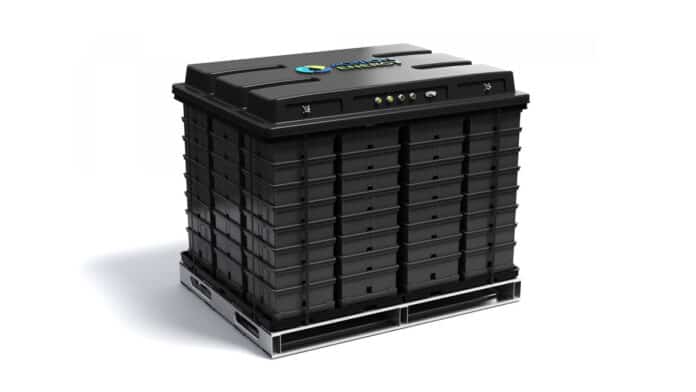
Seawater batteries for South Africa grid storage
By Kris van der Bijl
SEAWATER battery technology is still largely unproven at utility scale. But with 2026 peak tariff increases fast approaching, the Western Cape’s 31.7GW energy pipeline is already reshaping itself – favouring hybrid storage configurations as a financial and operational hedge against rising energy costs.
Seawater batteries offer a potential promise of being safer, cheaper, and free from expensive imported metals like cobalt.
They can use abundant seawater as an electrolyte, with sodium or chloride ions facilitating charge and discharge.
For investors and local manufacturers, seawater batteries represent a chance to participate in a growing market while supporting South Africa’s energy transition by adding new technology.
Seawater batteries as a cobalt-free solution
More traditional batteries favour raw materials like cobalt and lithium.
Cobalt is a major contributor to the cost and environmental footprint of lithium batteries.
Its supply is geographically concentrated, with roughly 70% of it coming from the Democratic Republic of the Congo, and is a supply chain, according to Oluwole Ojewale of the ISS Africa, entrenched in crime.
Professor Atsuo Yamada from the University of Tokyo calls for reducing cobalt dependency in rechargeable batteries, stating that the technology of cobalt-free batteries “is a technical one, but its impact could be environmental, economic, social and technological.”
One of the key advantages of seawater and related aqueous battery technologies is safety.
Recent research led by Xiaolei Wang at the University of Alberta confirmed that aqueous batteries can be safer, cheaper and easier to recycle than lithium‑ion systems, particularly when designed for grid‑level applications.
In his view, conventional lithium batteries “have reached their limitations in terms of energy storage capability, life cycle, and safety … they are not suitable for large‑scale grid‑level energy storage”.
Seeking newer alternatives to power grid storage technology is worthwhile.
Market potential and early adoption
The global market for alternative battery chemistries is currently a tale of two distinct segments. While “seawater batteries” remain a niche marine sensing market – valued at US$58.3 million by 2031 – the broader sodium-ion sector is the one aimed at grid disruption.
SNS Insider forecasts the global saltwater and sodium-ion market reaching US$105 billion by 2032.
For Western Cape hubs, the primary driver can be reckoned as the safety-to-density ratio.
These aqueous systems offer a non-flammable alternative to lithium-ion, and the Cape could do with fewer fire risks.
Aligning with South Africa’s energy policy goals
Why seawater batteries have yet to be integrated into South Africa’s struggling power grid is likely because the technology is still in the early stages of commercial readiness compared to well-established lithium-ion systems.
CBN reached out to the South African Independent Power Office, and they noted that they “have largely attracted lithium-ion technologies.”
But they do note an openness to Long-Duration Energy Storage technologies.
“The IPPO has recently engaged with the South African Energy Storage Association (SAESA), and SAESA has indicated that they are doing a study that focuses on the value of energy storage to the SA grid.”
They ultimately reiterated that they will “only procure as per the mandate and guided by the system requirements.
Non-lithium-ion technologies could form part of the storage technologies going forward, however this cannot be confirmed at this time.”
As research continues and pilot projects emerge, seawater battery technology has reason to become a co‑pillar in the country’s energy storage ecosystem alongside lithium‑ion and other alternative chemistries.