











How we can survive the knowledge cliff and silent de-industrialisation of the South African factory floor
By Merel van der Lei, CEO of Wyzetalk
 South Africa’s manufacturing and heavy industry sectors are facing a demographic reality that threatens to undo decades of operational maturity. A generation of highly skilled senior floor managers, toolmakers, and artisans is approaching retirement, bringing the sector to the edge of a severe knowledge cliff.
According to the 2025 Xpatweb Critical Skills Survey, the difficulty in sourcing engineering talent – specifically maintenance, industrial, and mechanical engineers – has surged to 38%. The scarcity of artisans, including electricians and millwrights, has more than doubled, with 22% of South African organisations now struggling to fill these critical technical roles.
As the “Class of 2025” enters the workforce, they are stepping onto factory floors where the retirement rate of senior technical experts is vastly outstripping the intake of new talent.
Industry leaders frequently respond to this data by ramping up recruitment drives and investing heavily in youth skills development. While building a pipeline of new talent is absolutely critical, the other crisis lies beyond the simple arithmetic of vacant roles. The more dangerous, invisible threat is the rapid evaporation of “silent knowledge”.
Silent knowledge is the unwritten, undocumented insights and intuition accumulated over decades of physical work on the factory floor. The best example of this I have seen in my time working with the manufacturing industry was when I saw how a lead engineer on a factory floor was ensuring super-efficient maintenance by using his pen.
The incredibly intricate machinery had systems and manuals and schedules, but each have their own quirks. This particular machine, the engineer explained, sometimes needed maintenance earlier than expected, but it wasn’t efficient to constantly do unnecessary maintenance and invasive checks. After years of experience with the machine, he developed a surefire way to determine maintenance needs in minutes. How? By placing a pen on top of the machine and tracking its vibration rhythm and sound. When the rhythm was slightly off, that was the sign maintenance was needed sooner.
That kind of silent knowledge is very common. The thing is that the engineer (and his pen) are kind of bottlenecks for that efficiency gain (and safety assurance) in a way, but when he (and his pen) leave, you start facing real problems.
For years, these types of veterans have literally held production lines together with cable ties and decades of carefully calibrated intuition.
When these experts retire, they take this floor-level intelligence with them. And they leave behind a serious vulnerability. Organisations are forced to expose a younger, less experienced workforce to complex machinery without the benefit of that accumulated context.
A junior technician inheriting a system that has been subtly modified over two decades faces a massive safety and operational hazard. A quirk in a machine that was safely managed and compensated for by a veteran suddenly becomes a dangerous mechanical failure waiting to happen. The unrecorded physical fixes and daily adjustments accumulate into a massive “maintenance debt”. When the senior artisan walks out the door for the last time, that debt matures instantly.
The instinct of many executive boards is to throw capital at the problem. Faced with the paradox of high unemployment and still a shrinking pool of skilled labour, they invest millions in new hardware, automated systems, and predictive maintenance algorithms. The assumption is that modernising the floor with new capital equipment will override the need for human intuition.
This can be a dangerous miscalculation. No amount of capital expenditure can instantly replace the contextual intelligence of an operator who intimately understands the unique friction points of a specific plant. Upgrading the hardware without securing the human software leaves the organisation highly exposed. And, in the end, every machine needs to be “trained” by those veterans in a certain way, too.
At base, a brand-new automated system still requires human oversight, and if the frontline employees lack the historical context of the facility’s operations, the promised efficiency gains of the new machinery will evaporate.
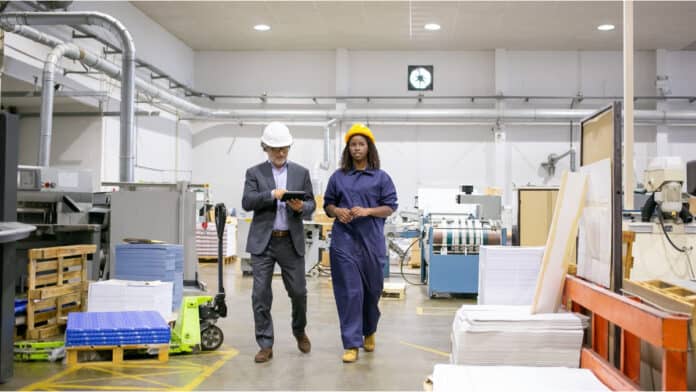
To prevent this silent de-industrialisation, organisations must fundamentally change how they view their frontline employees. We need to shift from viewing artisans as mere executors of daily tasks to recognising them as the primary repositories of institutional memory. The urgent operational priority is capturing this silent knowledge before the veteran workforce exits the building.
This requires extracting the artisan’s intuition and transforming it into a permanent, accessible digital asset. Instead of a senior engineer fixing a recurring flaw quietly and moving on, the process of diagnosing and resolving that flaw must be captured, shared, and logged in real-time.
Creating a living, evolving operational playbook allows new employees to instantly access the accumulated wisdom of their predecessors. It bridges the gap between the retiring expert and the incoming novice. And you don’t even have to make these insights mandatory training. Our clients sharing bite-sized training videos within the frontline communication system we implemented see more and more voluntary engagement every month. People want to learn – and they want to be good at what they do.
When an organisation establishes direct, intuitive feedback loops on the factory floor, they stop renting the expertise of their workers and begin institutionalising it.
The survival of South Africa’s manufacturing sector may depend on more than keeping the lights on and buying new equipment. Long-term industrial resilience requires us to treat the experience of our frontline workers as a critical, measurable asset. We must digitise the silent knowledge of our artisans today, ensuring that when they finally retire, their expertise remains firmly on the factory floor.