













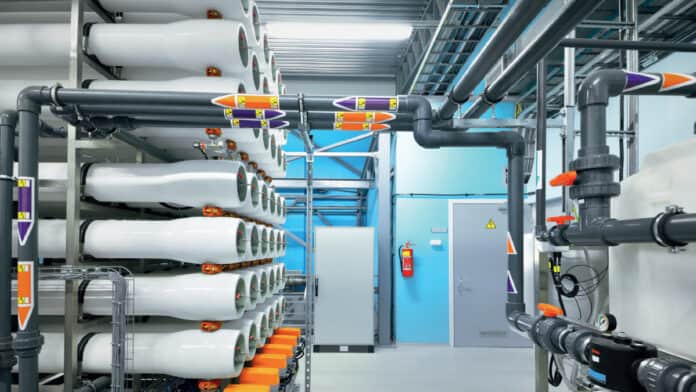
ifm conductivity sensors: The cornerstone of South Africa’s water-smart industry
SOUTH Africa’s engineers operate at the intersection of resource constraint and industrial ambition. Few parameters illustrate this balancing act as clearly as water quality. Whether in municipal treatment works, food and beverage plants, mining operations, the ability to measure water quality accurately and continuously has become non-negotiable.
Among the suite of analytical measurements available, conductivity stands out for its simplicity, robustness, and relevance. As an indicator of ionic content, conductivity provides immediate insight into purity, contamination, separation of media, and cleaning efficiency. In a water stressed country, this insight translates directly into reduced waste, improved uptime, and better compliance.
Why conductivity matters in a South African context
Conductivity measurement reflects how well a liquid conducts electrical current, which in water applications is directly related to dissolved salts and contaminants. For local industries, this single parameter supports multiple critical objectives:
- Verifying drinking, process, and ultrapure water quality;
- Monitoring filtration, reverse osmosis, and demineralisation efficiency;
- Distinguishing between product, rinse water, and cleaning agents in Clean-in-Place (CIP) processes; and
- Preventing downstream corrosion, fouling, and product losses.
In food processing hubs from the Western Cape to KwaZulu-Natal, conductivity is used to optimise CIP cycles, reducing chemical consumption and water use without compromising hygiene. In mining and power generation, it’s an early warning signal for scaling and mineralisation in cooling circuits.
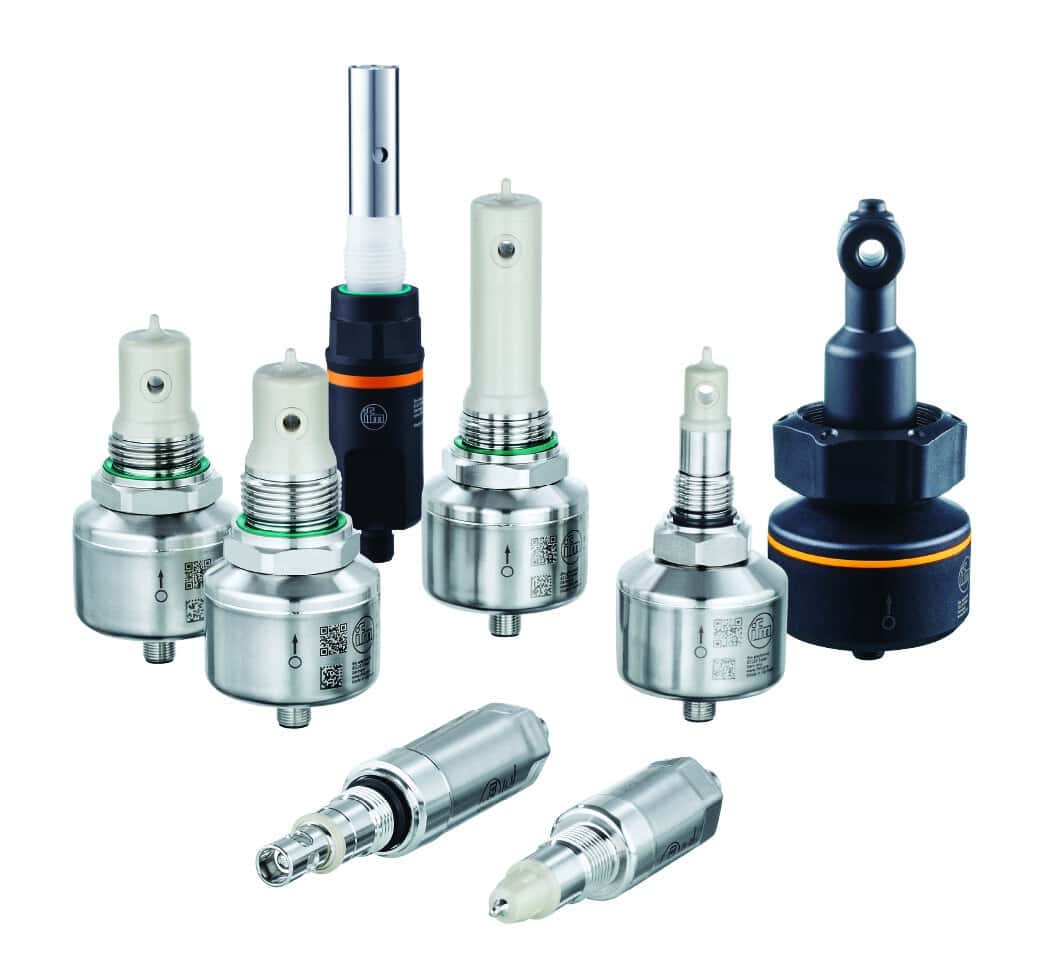
Compact sensors for real world plants
Traditional conductivity installations often relied on separate probes, transmitters, and extensive cabling, adding cost, complexity, and failure points. Modern compact sensors have changed this equation decisively.
ifm’s LDL family of conductivity sensors integrates the measuring element and evaluation electronics into a single housing, communicating digitally via IO Link or analogue outputs. Where cabinet space, installation time, and maintenance skills are limited, this compact architecture reduces both capital and lifecycle costs.
Conductive vs inductive measurement: Choosing the right tool
Modern conductivity sensing requires engineers to select between conductive and inductive measurement principles depending on the application.
Conductive sensors measure current directly through the medium and offer extremely high resolution at low conductivity levels. Devices such as the LDL101 can measure down to 0.04 µS/cm, making them ideal for ultrapure water systems in pharmaceuticals, electronics manufacturing, and hydrogen electrolysis.
Inductive sensors, by contrast, use electromagnetic coupling to determine conductivity without direct electrode contact, making them exceptionally resilient to fouling, coating, and aggressive media, key advantages in mining, water treatment, and CIP processes. They are widely used to distinguish between cleaning fluids, rinse water, and product, enabling faster phase detection and reduced wastage in food and beverage plants.
Polypropylene and corrosion resistance: A local advantage
One of the most significant recent developments is the introduction of fully polypropylene housed inductive conductivity sensors. In coastal plants, desalination facilities, chemical dosing stations, and filter installations, stainless steel sensors can suffer premature degradation due to salty air, acidic media, or aggressive cleaning chemicals. The LDL400’s polypropylene construction provides continuous corrosion resistance while maintaining a wide measurement range from 100 to 2 000 000 µS/cm.
Pure water, ultrapure challenges
As South African industry moves into higher value manufacturing and energy applications, pure and ultrapure water systems are becoming more common. In these environments, even trace contamination can disrupt processes or damage equipment.
Conductivity sensors designed for ultra-low ranges enable continuous monitoring of ion exchange, filtration, and membrane performance. A rising conductivity value acts as an early indicator that cartridges require replacement, or that breakthrough has occurred, long before quality is visibly compromised.
This preventative capability supports condition-based maintenance, reducing unplanned downtime and extending asset life which is critical in remote or energy intensive installations.
From measurement to decision: IO Link and data transparency
Modern conductivity measurement does not stop at the sensor. Digital communication via IO Link allows engineers to extract high resolution process data, temperature compensated values, diagnostics, and configuration information directly from the field device. This enables:
- Reduced wiring and faster commissioning;
- Standardised sensor inventories across plants;
- Remote diagnostics and troubleshooting; and
- Integration into IIoT and asset management platforms.
What ultimately distinguishes South African engineering is context. Sensors must operate reliably in environments defined by resource scarcity, high operating costs, and limited tolerance for failure.
Conductivity sensors may be small components, but their impact is systemic. By enabling precise measurement, early intervention, and data driven control, they help engineers deliver safer water, cleaner processes, and more efficient plants.
To view these products in action, visit ifm at Electra Mining Africa from 7 to 11 September 2026 at stand A06 in Hall 4.