











Common Boiler And Water Treatment Mistakes To Avoid
When it comes to boilers and water treatment, decisions that seem to save money or keep production moving in the short term can actually have expensive consequences. Lionel Maasdorp, Allmech MD, shares some of the mistakes his team encounters most often.
Underestimating the capabilities required
One of the biggest mistakes Allmech sees is customers sizing boilers, cooling towers and their supporting water treatment systems too closely to current requirements, without allowing for changing conditions or future demand.
For example, a plant needs 5 000 kg of steam an hour at maximum production, so the company commissions and installs a boiler capable of producing exactly that. On paper, it makes perfect sense. The problem, Maasdorp explains, is that plants seldom operate under perfect conditions.
“Equipment efficiency changes depending on factors such as colder weather, cleanliness and fuel quality,” Maasdorp. “Then a big order comes in, and the plant needs to increase production. Suddenly, they are trying to push the boiler to its limit.”
Failing to account for changing production needs
The problem often becomes apparent when a plant moves from an eight-hour shift to 12 or even 24-hour production. The boiler may be expected to run for longer, but the water softener supplying it was selected to meet the original operating pattern.
A softener designed to regenerate once a day, for example, may no longer be able to provide enough softened water for round-the-clock operation.
This can lead to operators finding creative ways to keep production going, including bypassing the softener and feeding hard water into the boiler while it regenerates. Allmech has even encountered operators who hurriedly remove the offending hosepipe when the service team arrives.
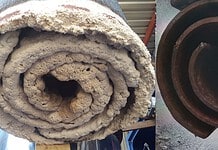
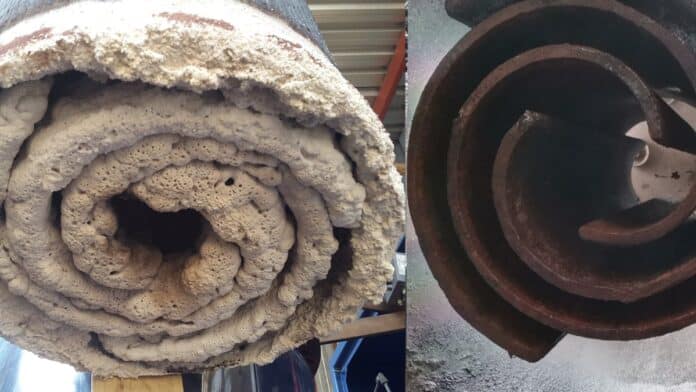
While Maasdorp says bypassing the softener may appear to solve an immediate production problem, but it creates another. Hard water can cause scale inside the boiler, reducing heat transfer and potentially requiring costly acid cleaning (thus affecting the boiler’s efficiency, driving up operating costs and even potentially shortening the boiler’s lifespan).
Committing to false economies
Another common problem is trying to reduce the cost of water treatment itself. Customers may delay buying salt, reduce regeneration or minimise blowdowns because these are seen as costs. But, as Maasdorp puts it, “Salt is cheap in comparison to the cost of cleaning your boiler with acid.”
In one recent case, a customer opened two boilers for inspection. One was spotless; the other had significant scale build-up and required an acid wash. Allmech’s service reports showed that the customer had repeatedly been warned that the softener’s brine tank did not contain enough salt. Production hours had also increased, meaning the existing softener could no longer comfortably meet demand.
Allmech had previously recommended upgrading from a simplex to a duplex softening system, but the customer had opted against the additional expense.
Neglecting the basics
Boiler blowdowns are another area where apparently small shortcuts can become costly.
Automated TDS controls help manage the concentration of dissolved solids in boiler water, but they do not replace manual bottom blowdowns, which remove material that settles at the bottom of the boiler.
At one plant, a boiler was run at maximum capacity for three months to meet production demand without the necessary blowdowns. Deposits accumulated on the tubes, creating an insulating layer that prevented heat from being transferred efficiently. Eventually, tubes began to bend.
The customer initially suspected hardness and a problem with the water softening system. Testing showed otherwise: the deposits were predominantly dissolved solids that had accumulated because they were not being removed effectively.
The consequences of poor water management can extend well beyond cleaning and repairs. Scale reduces heat transfer, meaning more fuel is required to produce the same output. “A 1 mm scale layer on tubes typically cuts the heat absorption of that surface by about 10–15%, depending on the scale type and base heat-transfer coefficient. That means the boiler must raise the flue gas temperature to deliver the same steam load, and the boiler efficiency falls roughly in line with the extra heat lost up the stack,” says Maasdorp.
The solution: keep the system in step with the plant
Maasdorp’s advice is simple: make sure the softener is operating correctly and has a reliable supply of water, power and salt; carry out proper blowdowns rather than relying solely on automated controls; and review the water treatment system whenever operating conditions change.
That includes a change in water source. As more businesses turn to boreholes as an alternative supply, Maasdorp cautions that borehole water may have very different hardness levels from municipal water, and these can change seasonally.
Most importantly, he says, tell your water treatment partner when production hours, water sources or other plant requirements change. A system designed for yesterday’s operating conditions may no longer be the right system for today.