








Water costs put food manufacturers’ cleaning routines under scrutiny
By Kris van der Bijl
WATER efficiency in the Western Cape is often framed as an environmental responsibility. For food manufacturers, it is also a cost and operational concern: water is used not only in production, but in cleaning, heating, pumping and wastewater treatment.
The South African Weather Service’s 31 August seasonal outlook indicated that El Niño conditions were expected to continue through the 2026/27 summer, with below-normal rainfall forecast in many parts of the country.
Separately, the Western Cape has experienced a drier winter, with provincial officials warning of increased pressure on water resources
On 9 October, Zahid Badroodien, the City’s mayoral committee member for water and sanitation, said dam levels were lower than the City would like.
For manufacturers, uncertain supply makes it important to manage water as carefully as any other operating cost. The challenge is to find savings without compromising cleaning standards, hygiene or food safety.
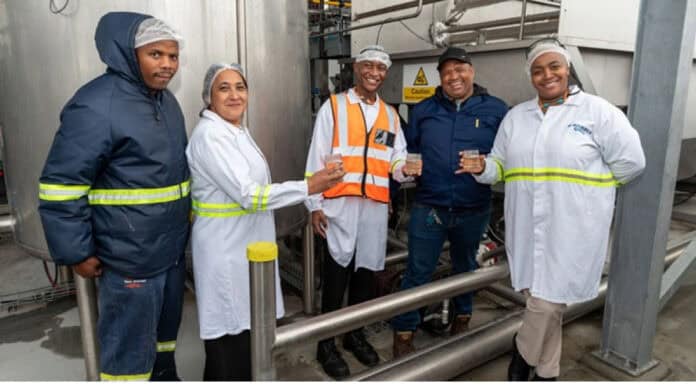
South Bakels, a Cape Town food-ingredients manufacturer, shows how a food plant can shrink its exposure to restriction prices. Its Montague Gardens plant cut water consumption while production volumes grew. The company received four stars at the City’s latest Water Star Rating Awards.
Natasha Khan, the company’s health, safety and environment manager, said the gain from each saved litre reaches past the meter.
“Every unnecessary litre can also carry additional costs associated with heating, pumping, wastewater handling and treatment,” she said.
Cleaning habits hold the savings
Khan said manufacturers tend to concentrate on major equipment and high-consumption processes. She sees considerable opportunity in routine cleaning and the way employees interact with equipment.
South Bakels Cape Town Montague Gardens (South Bakels CMG) asked whether it drew the water it needed or the water it had become accustomed to.
Khan said what surprised her most was that the opportunities lay in ordinary practices that had become part of the plant’s routines. Water could flow for longer than a task required because that was the established way of doing the task. Once a habit settles into a process, the excess stops looking like waste.
Those small losses repeat on every shift, every day of the year. Restriction tariffs would raise the cost of each repeat.
South Bakels CMG studied its cleaning practices and found variations between operators and shifts. It made the methods that met its cleaning requirements with less water the standard on all three shifts. The plant’s existing hygiene verification tested each change before wider adoption.
Staff scrape and brush ingredient residue off equipment before rinsing. Low-flow pre-rinse spray valves have replaced conventional hose pipes. Washing happens in full batches, in place of partial loads through the day. Where food-safety requirements allow, final rinse water from one task serves as the pre-rinse for another.
“Data tells you where to look, but employees often help you understand why the consumption is happening,” Khan said.
South Bakels CMG learned that significant improvements can come with little capital investment.