









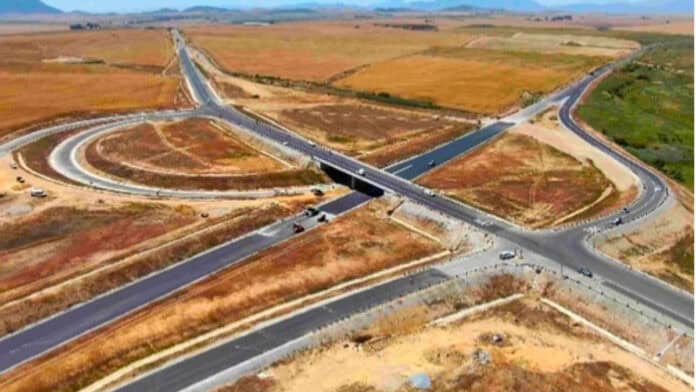
Malmesbury Bypass completes West Coast Freight Corridor
By Kris van der Bijl
THE Malmesbury Bypass opened this month at a total construction cost of R693 million, completing a strategic freight corridor that links the Port of Saldanha and its Industrial Development Zone directly to the N7, N1 and N2.
For the Western Cape, a province whose three-year infrastructure budget of R39.7 billion is 80% larger than Johannesburg’s and nearly double that of eThekwini, the bypass is both a freight intervention and a statement of intent about where the province’s economic weight is being directed.
The 34-month project was, despite common joking assumptions about the civil construction industry, delivered within its planned budget.
It created 305 work opportunities during construction, with 40 local enterprises and 15 emerging contractors participating in the works.
Multiple freight options for Western Cape businesses
Jandre Bakker, Director of Operational Support at the Western Cape Government, noted that the bypass is not designed around any single freight category.
The route supports industrial, logistics, abnormal load, and future freight movement, while removing heavy vehicles from Malmesbury town itself.
The bypass, therefore, relieves a bottleneck that has historically constrained the movement of oversized loads between the coast and the interior, a constraint with direct implications for the kind of large-scale industrial and energy projects the Saldanha Bay IDZ is designed to attract.
Why the Saldanha Bay Freight Route Connection?
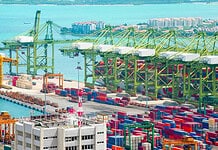
Saldanha Bay was identified as a strategic national growth node on the basis of three converging assets: the port, the Industrial Development Zone (IDZ), and its position along the Saldanha-Northern Cape Development Corridor.
Significant public and private investment has followed that designation, spanning port expansion, industrial development, energy-related opportunities, and freight logistics infrastructure.
The bypass strengthens the freight and economic linkages between the West Coast and inland markets that make that investment viable.
For Freeport Saldanha, the road’s significance is competitive rather than operational.
Conray Joseph, responding on behalf of Freeport Saldanha, the Saldanha Bay Industrial Development Zone Licencing Company frames it in terms of investor confidence:
“For a port-based Special Economic Zone, reliable connectivity is central to competitiveness, investor confidence and ease of doing business.”
Joseph identifies marine services, green energy, manufacturing, engineering, logistics and warehousing as the sectors that stand to benefit most directly from the improved corridor, while noting that road infrastructure must be complemented by continued progress in port access, rail efficiency, energy security, and serviced industrial land.
Ease of doing business in the Western Cape
To say that the construction of a road from the interior to a major port will assist economic activity in the region is to state the obvious.
The Western Cape Government Department describes it in terms of reduced transport costs, shorter travel times, and the investment signal that reliable connectivity sends to the private sector.
For businesses operating along the West Coast corridor, the bypass reduces the friction that has historically made Saldanha Bay a more difficult proposition than its strategic assets would otherwise justify.
But perhaps the less obvious signal is this: a R693 million public infrastructure project, delivered within budget across 34 months, in a province managing a R39.7 billion infrastructure programme.
For private investors assessing whether the Western Cape can execute at scale, that track record is a good metric of the successes of government and business projects.