










SA Plastics Pact launches ambitious 2030 targets for South Africa’s circular economy
By Adrian Ephraim
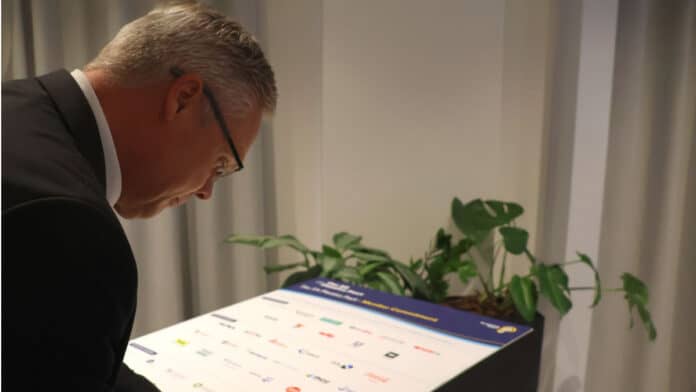
CAPE Town hosted a milestone moment for South Africa’s circular economy on 1 June 2026 when the SA Plastics Pact officially launched its 2030 targets at GreenCape’s Foreshore offices, with Minister of Forestry, Fisheries and the Environment Willie Aucamp delivering the keynote address.
The event brought together some of the country’s most influential brands, retailers, packaging manufacturers and recyclers under the same roof as the government minister responsible for regulating them. Founding members including Pick n Pay, Woolworths, Spar, Tiger Brands, Unilever and Heineken were joined by business members spanning the full plastics value chain, from Coca-Cola Beverages South Africa and PepsiCo to recyclers Extrupet and Atlantic Plastic Recycling.
Minister Aucamp used the occasion to signal that government sees itself as a participant in this process, not just an observer.
“I am proud that my Department has been part of the SA Plastics Pact since its launch in January 2020 and here we are again in 2026, to not only celebrate the achievements of this important initiative to date, but to also plan and collaborate for its next chapter,” he said.
“The launch of the SA Plastics Pact 2030 is a declaration of intent to achieve more. It signals our collective determination to move beyond business as usual and towards a future in which economic growth, environmental sustainability, and social inclusion go hand in hand.”
The SA Plastics Pact, which launched in 2020 and now counts 53 member organisations, has seen member companies invest over R4-billion since inception to redesign the packaging landscape and scale local recycling capacity.
The 2030 targets represent what the Pact describes as a major structural shift toward systemic, upstream, and midstream interventions across South Africa’s plastics value chain.
The four targets are substantive. Members have committed to a 20% intensity reduction in virgin fossil-fuel-based packaging, 100% of rigid plastic packaging designed for recyclability, 70% of flexible plastic packaging designed for recyclability, and a 55% output recycling rate for plastic packaging.
That last target carries particular significance. Roan Snyman, project manager of the SA Plastics Pact at GreenCape, explained the methodological shift it represents.
“In the past we measured what arrives at the recycling facilities, but often a lot of that still goes to landfill. This new target measures what actually leaves the recycling facility to be made into new products. We want to understand where the value goes, because that is what we want. We want the materials to be part of the economy.”
The dedicated target for flexible packaging is also new. Flexibles, think crisp packets, sauce sachets and multi-layer pouches, are among the most difficult materials to recycle anywhere in the world. Snyman was candid about it.
“Even globally it is hard to solve. It is small, it is multi-layered often. But there is a lot of work going on.”
Central to achieving the 2030 ambitions is the roll-out of Plastic Reboot, a global five-year project active in 15 countries, delivered in South Africa through a partnership between UNIDO, WWF South Africa, the CSIR and GreenCape, with a specific focus on circular solutions in the food and beverage sector. WWF South Africa CEO Morné du Plessis, who introduced the project at the event, called on Pact members not to get complacent despite the progress made.
Saloshnee Naidoo, Circular Economy Programme Manager at GreenCape, said the launch marked a shift in maturity for the initiative.
“The SA Plastics Pact has reached a point of maturity where ambition is increasingly being translated into measurable, cross-sector action. With the formal launch of the 2030 targets alongside Minister Aucamp, we are sharpening our focus on the deep systemic changes necessary to drive South Africa toward a truly future-fit, resilient plastics economy.”
On the question of who still needs to join the conversation, Snyman was direct. Membership remains voluntary, and not every company placing plastic on the South African market is in the room.
“It is still an ambitious initiative. Some companies it will not appeal to, and that is just the honest truth. But as far as we can, we try and deliver the value that those companies need.”
With new working groups forming and the 2030 targets now formally signed, Snyman sees this as a genuine inflection point. “It is an amazing time to be part of this.”