








Not all fasteners are created equal: How Stainless Steel fasteners improve ESG performance and infrastructure longevity
Corrosion-resistant fastening systems support long-term infrastructure reliability
By Diane Silcock
BUSINESSES seeking to improve their ESG performance should pay closer attention to the products they procure rather than simply selecting the lowest-cost quotation. Stainless Steel fasteners are used across virtually every industrial sector and are designed for long term infrastructure performance, safety and durability. Their corrosion resistance and extended life help improve life-cycle costing while reducing environmental impact, and their recyclability extends that benefit beyond the end of service life.
Why engineers are specifying stainless steel fasteners for safety and longevity
Cape Town-based Fastenright, South Africa’s leading specialist supplier of stainless steel fasteners, says that as engineers place greater emphasis on maintenance, life-cycle performance and safety, they are increasingly specifying stainless steel fasteners for the strength, corrosion resistance and durability that deliver a longer design life.

Fastenright Sales Manager Heyns Botha says, “We believe fastening systems should be treated as engineered components, because they are critical to structural reliability and safety. From a sustainability perspective, it’s not only about environmentally-friendly materials, it’s also about building infrastructure that lasts longer and ultimately performs reliably for decades.
“Stainless steel fastening systems help reduce maintenance cycles, downtime, replacement frequency, and material wastage. Correct specification from the outset helps prevent premature corrosion and unnecessary infrastructure deterioration. That’s why Fastenright promotes responsible specification rather than short-term price-driven procurement. At the end of the day, a structure or assembly is ultimately only as reliable as the fasteners holding it together, so a single under-specified or failed fastener can compromise an entire installation.”
Corrosion resistance that cuts maintenance costs
In highly corrosive environments such as water treatment plants, marine infrastructure and coastal installations, Fastenright’s A4-80 stainless steel fasteners combine the high corrosion resistance of the A4 (316) grade with greater tensile strength than standard A4-70 fasteners. The same grade also delivers structural integrity and long-term durability in petrochemical plants and other heavy-duty industrial applications.
Non-stainless fasteners may perform adequately at first, but often fail prematurely in these demanding environments, driving up maintenance costs, downtime and safety risks.
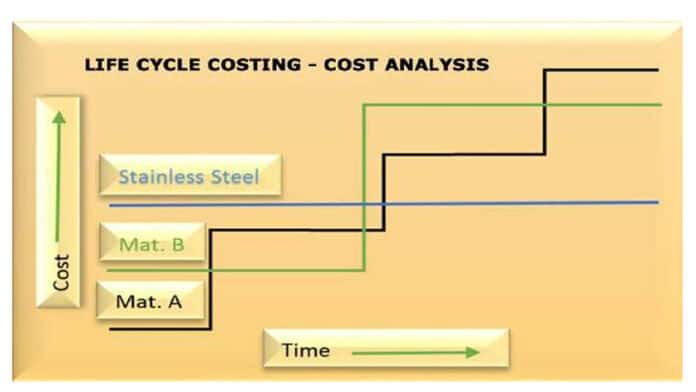
“Life-cycle costing is about the installation cost, maintenance, replacement frequency, downtime, labour costs, safety risks and operational lifespan,” says Botha.
“While high-quality stainless steel fasteners may cost more initially, they often deliver substantial savings over 10 to 20 years. For example, a lower-cost or non-stainless fastener might need replacing two, three or more times across that period, and each replacement carries far more than the price of the part: taking equipment offline, gaining access, labour and lost production can far exceed the original saving many times over.”
Proven on wastewater and renewable energy projects
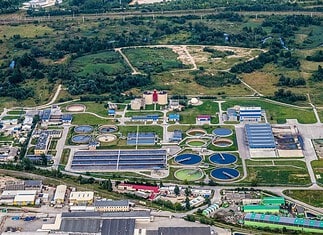
Fastenright recently supplied A4 wedge anchors, nuts and bolts for Potsdam Wastewater Treatment Works in Milnerton in the Western Cape. The products were used for catwalk structures and pipework flange assemblies.
In the renewable energy sector, the company partners with suppliers of the rail mounting systems and ground-mounted structures used for photovoltaic panel installations. Those fixings were put to the test during recent severe storms in the Western Cape, where solar panels installed using Fastenright fastening systems successfully withstood extreme weather conditions.
Stock on the shelf when projects can’t wait
Fastenright maintains a substantial stockholding and has recently completed construction of a fifth warehouse at its Cape Town facility. The expansion adds a further 800 m2 to the company’s existing stockholding capacity of more than 2 000 m2 under roof.
Fasteners are often one of the last items considered in a project, so engineers and specifiers frequently require stock at short notice.
“99% of the time we can supply stock off the shelf,” says Botha.
Specify it right the first time – then fit and forget
Fastenright says sustainability begins with building infrastructure correctly the first time. Stainless steel fasteners play a critical role in ensuring lasting structural performance across industries by reducing premature failures, frequent replacements and material wastage. Stainless steel is also highly recyclable: industry studies estimate that around 95% is recovered at the end of its service life and reused rather than going to waste, giving it a circular-economy dimension alongside its long service life.
Designed for durability and safety, correctly specified stainless steel fastening systems can help companies improve ESG performance while reducing long-term operational and maintenance costs.
Fastenright is a member of the Southern Africa Stainless Steel Development Association (Sassda).
Contact Heyns Botha at heyns@fastenright.co.za
Website: www.fastenright.co.za
Facebook: https://www.facebook.com/fastenrightsa
Instagram: https://www.instagram.com/fastenright_southafrica
LinkedIn: https://www.linkedin.com/company/fastenrightsa