











World Environment Day: Five years on, South Africa’s EPR system is showing what partnerships can achieve
By Polyco CEO Patricia Pillay
EVERY year, World Environment Day reminds us that environmental progress is not driven by policy alone. Real change happens when governments, businesses and communities work together to build systems that make sustainable behaviour possible in everyday life.
This year’s theme, focused on climate action, is a reminder that environmental resilience depends not only on ambitious targets, but on practical systems that reduce waste, strengthen local economies and keep valuable resources in circulation.
In South Africa, one of the most important shifts towards that kind of circular economy began five years ago with the introduction of Extended Producer Responsibility (EPR) regulations. Widely regarded as one of the country’s most significant waste management reforms, EPR fundamentally changed how industry participates in the recovery and recycling of packaging waste.
The regulations, introduced in 2021 and implemented from 2022, require producers to take responsibility for the post-consumer packaging they place on the market by funding collection, recycling and recovery systems through Producer Responsibility Organisations (PROs). More specifically, member companies contribute an EPR fee for every tonne of packaging produced, a direct, tangible commitment to the full lifecycle of their products.
It is this collective contribution that makes the infrastructure, innovation and community-level collection work possible. Five years later, the impact of this is becoming increasingly visible, and none of what has followed would have been achievable without member support.
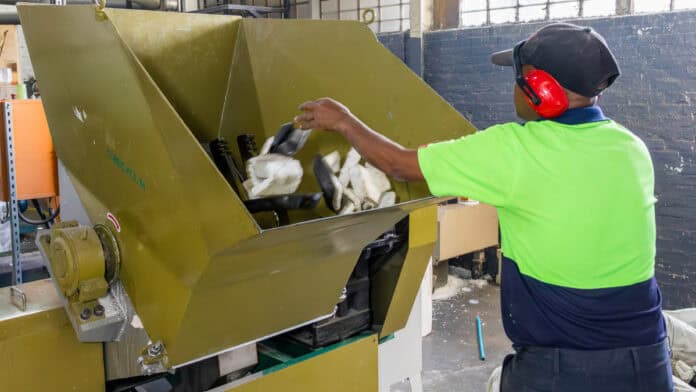
Across the country, PROs, municipalities, recyclers, waste reclaimers and community organisations have collectively expanded recycling infrastructure, improved collection systems and created thousands of economic opportunities across the recycling value chain.
At Polyco alone, more than R531 million has been invested into recycling education, infrastructure and collection initiatives since the implementation of mandatory EPR. Over 216 projects have been supported nationally, helping divert more than 789 000 tonnes of plastic waste from landfill and the environment.
But perhaps the most important lesson from the first five years of EPR is not simply the volume of waste diverted. It is the recognition that environmental systems work best when they are collaborative, localised and inclusive.
One example is the iThemba Phakama 4Ps (People, Public, Private, Partnership) programme implemented in partnership between Polyco and the Western Cape Department of Environmental Affairs and Development Planning (DEA&DP).
The initiative connects schools, households and local recycling systems through school-linked collection hubs, where learners bring recyclable materials collected from their homes and communities. Schools receive financial returns from the material collected, creating an additional income stream that can be reinvested into infrastructure and educational priorities.
The programme reflects a broader shift taking place within South Africa’s recycling economy where waste is increasingly being viewed not simply as an environmental problem, but as a resource capable of creating social and economic value when the right systems are in place.
During the 2026 expansion phase, the programme was rolled out to an additional 14 low-income and no-fee schools across the Western Cape, bringing the total number of participating schools to 31. This year’s rollout is expected to reach an additional 13,700 learners and over 380 educators. Since launch, the programme has collected more than 40 tonnes of recyclables and reached over 30,000 learners and more than 900 educators across participating schools.
Similar systems are being developed elsewhere across the country through buy-back centres, mobile collection units, waste reclaimer support programmes and municipal partnerships funded under the EPR framework.
Importantly, these initiatives are helping demonstrate that climate action does not only happen at global summits or through large-scale infrastructure projects. It also happens in schools, neighbourhoods and communities where people are given practical opportunities to participate in the circular economy.
At the same time, the first five years of EPR have also highlighted areas where the system still needs to evolve.
While significant progress has been made, challenges remain around outdated recycling infrastructure, unreliable municipal collection systems, non-compliance by some obligated producers and the integration of informal waste reclaimers into formal recycling systems.
The next phase of EPR implementation will therefore require deeper collaboration between government, industry, municipalities and communities. Not only to strengthen collection and recycling systems, but to ensure that the economic opportunities created through recycling are more inclusive and sustainable over the long term.
There is also growing recognition that clearer regulatory alignment and greater implementation certainty will be important to sustaining momentum. Industry stakeholders have participated in multiple public consultation processes on proposed amendments to the EPR regulations, with many of these discussions focused on improving coordination, strengthening enforcement and refining operational aspects of the framework.
This ongoing engagement between government and industry is an important part of ensuring that the system continues to mature in a way that is practical, scalable and responsive to the realities on the ground.
What the past five years have demonstrated is that South Africa has already laid important foundations for a more circular economy.
The challenge now is not whether EPR should exist, but how to strengthen and expand it so that more communities, municipalities and sectors are able to participate meaningfully in the system.
World Environment Day is often framed around the urgency of environmental threats. But it is also an opportunity to recognise the systems, partnerships and local initiatives already created that are helping build more sustainable communities.
South Africa’s EPR journey remains a work in progress. But five years in, it is increasingly clear that when government, industry and communities work together, environmental responsibility can also become a driver of economic opportunity, local resilience and long-term climate action.