












The real test of localisation isn’t policy – it’s procurement
Manufacturers say South Africa’s buy-local ambitions are being undermined by procurement gaps, non-compliant imports and weak enforcement.
Localisation has become one of South Africa’s favourite economic buzzwords. It appears in policy documents, industry master plans and conference speeches. Yet, for many manufacturers, the reality on the factory floor tells a different story.
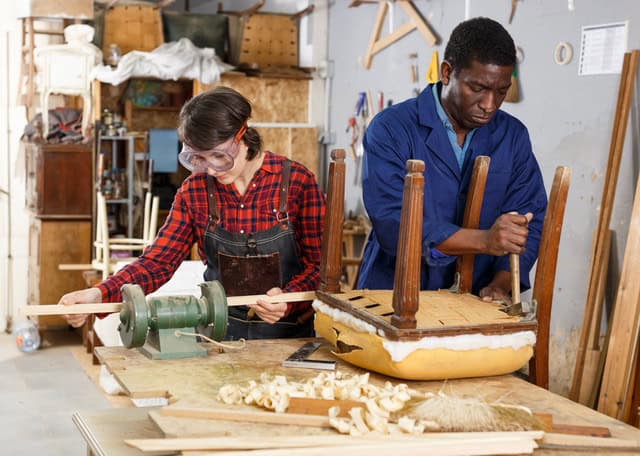
Despite widespread support for local manufacturing, South African furniture producers continue to face significant barriers to growth. Procurement opportunities remain difficult to access, imported products continue to flood the market, and compliance requirements are often applied unevenly.
For an industry that supports thousands of jobs and a value chain spanning forestry, textiles, chemicals, logistics, retail and design, the stakes are high, says the South African Furniture Initiative’s (SAFI) CEO, Greg Boulle: “The furniture industry has enormous potential to contribute to economic growth and job creation. The challenge is ensuring that localisation commitments translate into real opportunities for South African manufacturers.”

Policy versus practice
One of the biggest frustrations within the industry is the gap between localisation policy and procurement implementation. While government continues to champion local procurement, manufacturers argue that many furniture tenders still fail to include meaningful local content requirements. Procurement processes are often inconsistent, while opportunities are not always visible to local suppliers.
According to Boulle, localisation will only succeed when procurement decisions actively support domestic manufacturing: “Localisation cannot simply exist as a policy objective. It must be reflected in purchasing decisions that create sustainable demand for locally manufactured products.”
Industry stakeholders believe greater transparency, stronger local-content requirements and improved enforcement could help unlock opportunities for South African manufacturers while supporting the objectives of the Furniture Industry Master Plan.
To help manufacturers identify opportunities more efficiently, SAFI members have access to the SAFI Tender Bulletin – a centralised platform featuring government tenders relevant to the furniture industry, including furniture, seating, office furniture, school furniture and mattresses.
The cost of unfair competition
Manufacturers are also raising concerns about the impact of illicit trade, under-declared imports and products that may not comply with South African standards. These products often enter the market at lower prices, creating an uneven competitive environment for businesses that invest in compliance, skills development and responsible manufacturing practices.
These concerns extend well beyond the furniture industry. The Consumer Goods Council of South Africa (CGCSA), which represents more than 9,000 companies across the consumer goods value chain, has identified illicit trade and counterfeiting as one of the most significant threats to South Africa’s economic growth, tax revenues and consumer safety. Through its Anti-Illicit Trade Desk, the organisation works with industry, law enforcement agencies and government to combat illicit and counterfeit goods across multiple sectors.
“Illicit trade impacts legitimate businesses, erodes consumer confidence and places compliant manufacturers at a significant disadvantage,” says Tracy Symons, Marketing Relationship Manager at SAFI. “The fact that organisations such as CGCSA have made illicit trade a national priority demonstrates the scale of the challenge facing South African industry.”
A new gatekeeper for imports
One development that could help address these concerns is the introduction of the Pre-Shipment Verification of Conformity (PVoC) programme, expected to become mandatory from September 2026. The system will require certain imported products, including furniture and mattresses, to be inspected and certified before shipment to South Africa.
The programme is designed to ensure that imported products meet the same quality and safety standards expected of local manufacturers before they enter the South African market. “Local manufacturers invest heavily in compliance, quality control and responsible production practices,” says Boulle. “Competition should be based on quality, innovation and value, not on products that fail to meet South African standards.”
Turning localisation into growth
Jeannine van Straaten of Proudly South African believes South Africa already has many of the ingredients needed to grow local manufacturing. The focus now should be on implementation.
“Every locally manufactured product supports jobs, skills development and economic activity across multiple industries,” she says. “The opportunity exists to strengthen local manufacturing, but success will depend on creating an environment where local businesses can compete fairly and confidently invest in growth.”
For many manufacturers, the message is simple: the conversation around localisation has largely been won. The real challenge now is turning policy commitments into procurement decisions, stronger compliance and measurable market opportunities.