








Steenkampskraal rare earth mine – Local processing gains momentum
By Kris van der Bijl
FEW mining stories have captured the Western Cape business community quite like Steenkampskraal. The monazite mine north of Vanrhynsdorp announced on 23 June 2026 that it had produced high-purity mixed rare earth products with Mintek at laboratory scale.
Such a facility opens the possibility for South Africa to move beyond exporting raw concentrates and instead produce higher‑value rare‑earth products used in advanced technologies.
In time, this could support domestic manufacturing of components such as permanent magnets for electric‑vehicle motors, wind turbines and defence systems, rather than finished lithium‑ion battery cells.
The long‑term goal is to keep more of the value chain on shore, reducing reliance on imported processed materials for the energy transition.
Steenkampskraal targets local rare earth separation
Steenkampskraal is the world’s highest-grade rare earth element and thorium deposit. Anglo American opened it in 1952 to extract thorium for international nuclear energy programmes. It was later placed on care and maintenance.
The mine came out of care and maintenance in 2024. Approvals came from the National Nuclear Regulator and the Department of Mineral and Petroleum Resources.
The Industrial Development Corporation funded the phase 1 metallurgical processing plant in full. Construction is under way and commissioning is scheduled for August 2026.
The June result made South Africa the first African country to produce mixed rare earth products through a partnership between a mining company and a national research institution.
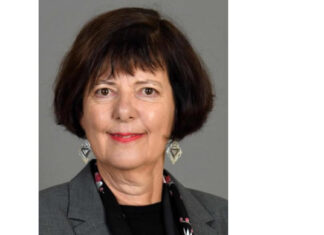
Steenkampskraal executive chairman Enock Mathebula said the company is “advancing discussions and development work aimed at establishing separation capabilities in South Africa”.
Separation turns mixed product into individual oxides. It is the step that would keep the higher-value work on shore. Mathebula said concentrate production starts later this year, with first shipments before the end of 2026.
Accredited laboratory testing supports Cape beneficiation
But a new beneficiation laboratory attained new accreditation, a story that slid under the scope of the new Steenkampskraal mine.
The Council for Geoscience announced on 14 August 2026 that its Analytical Services laboratory attained ISO/IEC 17025 accreditation.
ISO/IEC 17025 is the international benchmark for testing and calibration laboratories. Accreditation confirms technical competence, impartiality, consistency and a quality management system.
Council for Geoscience chief executive Mosa Mabuza said the accreditation “demonstrates that our laboratory capabilities meet an internationally recognised standard of technical competence”.
Mabuza said the milestone strengthens confidence in the scientific services the Council provides. He said it creates opportunities to expand partnerships and services as the organisation positions geoscience at the centre of development.
What accredited results mean for Western Cape operators
The new accredited laboratory can serve the following: mining, environmental, infrastructure and research. Western Cape quarries, exploration companies and environmental consultancies fall inside those categories.
The Council states that operating to internationally recognised standards gives assurance that analytical results are accurate, reliable and globally comparable. It lists the applications as exploration, environmental monitoring, resource management and scientific research.
The Council also states that the accreditation supports regulatory compliance requirements.