










Africa’s Energy Leaders To Gather In Cape Town As Continent Turns Energy Challenge Into Growth Opportunity
19th Africa Energy Indaba to focus on investment, infrastructure, energy security and the power required to drive Africa’s next phase of economic growth
Cape Town, South Africa: 6 October 2026 – Africa’s energy sector is entering a defining period as governments, investors and industry leaders confront one of the continent’s most important economic questions: how can Africa build the energy systems required to power its next era of growth?
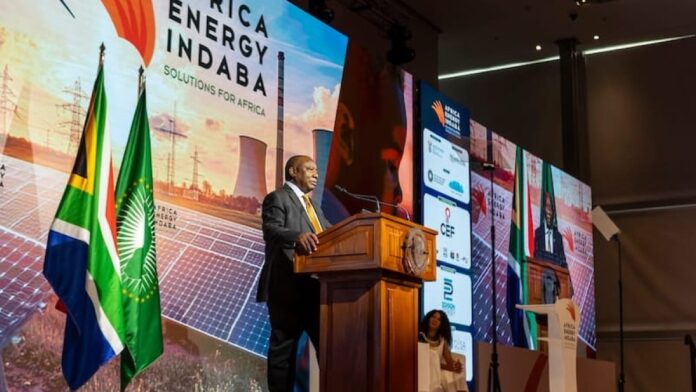
This will be at the heart of discussions when energy leaders from across Africa and internationally gather for the 19th edition of the Africa Energy Indaba, taking place from 2–4 March 2027 at the Cape Town International Convention Centre (CTICC), South Africa.
Under the theme “African Energy – Pathways to Prosperity: Connectiveness and Cooperation,” the 2027 Indaba will bring together Energy Ministers, government leaders, utilities, investors, financiers, project developers, energy users, technology providers and industry executives to address the investment and infrastructure required to turn Africa’s enormous energy potential into economic opportunity.
The discussion comes at a critical moment for the continent.
Africa has extraordinary energy resources, a rapidly growing population, expanding cities, significant mineral wealth and enormous potential for industrialisation. Yet insufficient electricity supply and infrastructure continue to constrain economic development in many markets. Closing this gap represents not only one of Africa’s greatest challenges, but also one of its greatest investment opportunities.
From Energy Access to Economic Growth
The 2027 Africa Energy Indaba will examine energy not simply as an infrastructure challenge, but as a fundamental enabler of industrialisation, manufacturing, mining, beneficiation, digitalisation, trade, investment and job creation.
A major focus will be on moving beyond ambition towards implementation.
Mission 300 will be examined from the perspective of what is actually being delivered, where bankable opportunities are emerging and which reforms are beginning to unlock investment. Attention will also turn to the infrastructure needed to support economic growth, including the expansion of Africa’s transmission grids and greater cross-border integration.
Mining and major industrial users will feature prominently in discussions around energy corridors, where large electricity users can provide anchor demand for new generation and help justify transmission infrastructure that ultimately supports wider economies and communities.
The programme will also explore how the African Continental Free Trade Area (AfCFTA) can help move energy opportunities towards implementable projects, financial close and ultimately infrastructure on the ground.
Mobilising Capital for Africa’s Energy Ambitions
Investment will be a central theme throughout the Indaba.
Africa’s energy ambitions will require significant participation from governments, development finance institutions and, increasingly, private capital. Discussions will explore how markets can bridge financing gaps, reduce project risk and create the regulatory and commercial environments required to attract long-term investment into energy infrastructure. This will include consideration of new generation, transmission and distribution, decentralised energy, renewable energy, gas, storage and hybrid systems.
Greater integration between African electricity markets will also come into focus, including cross-border transmission, regional power pools, wheeling and open-access electricity markets.
Energy Security in an Increasingly Volatile World
Recent global geopolitical and economic disruption has demonstrated how exposed African economies can be to events beyond their borders. Fuel-price shocks, disrupted shipping routes and commodity shortages have reinforced the importance of building more resilient African energy systems.
The opening discussions at the 2027 Indaba will therefore examine what genuine African energy resilience looks like and how countries can strengthen their ability to withstand future global shocks.
AI, Technology and the Energy System of the Future
Technology is also beginning to fundamentally change the way energy systems are developed and operated.
The Indaba will explore the rapidly expanding role of Artificial Intelligence and digital solutions across Africa’s utilities, electricity grids and energy markets, including their potential to address skills constraints, improve system management and accelerate the deployment and integration of new generation technologies.
The conversation will extend beyond adopting technologies developed elsewhere to consider how Africa can strengthen its own research, innovation and commercialisation capabilities.
From Africa’s Resources to Africa’s Industries
Another critical discussion will centre on the relationship between energy, mining, critical minerals and industrialisation.
Africa possesses many of the resources required for the global energy economy. The opportunity is to capture substantially more value from these resources within the continent. The Indaba will examine how energy availability can support mineral beneficiation, manufacturing and industrial development, creating a stronger connection between what Africa extracts, what it produces and what it ultimately exports.
A Gathering of Africa’s Energy Leaders
More than a conference, the Africa Energy Indaba has developed into a meeting place for the people responsible for financing, developing, regulating, supplying and consuming Africa’s energy.
The 2027 gathering will provide a platform for government-to-government, government-to-business and business-to-business engagement, connecting African opportunities with global capital, technology and expertise. The objective is increasingly clear: Africa needs energy infrastructure, but that infrastructure must ultimately enable something much bigger.
It must enable economic growth.
As the continent seeks to industrialise, expand manufacturing, beneficiate its mineral resources, develop new industries and create employment for a rapidly growing population, the availability of reliable and competitive energy will increasingly determine the pace at which those ambitions can be realised.
The 19th Africa Energy Indaba will bring the leaders of this transformation together in Cape Town to discuss not simply how Africa powers itself, but how energy can power Africa’s prosperity.
Africa Energy Indaba 2027
Dates: 2–4 March 2027
Venue: Cape Town International Convention Centre (CTICC), Cape Town, South Africa
Theme: African Energy – Pathways to Prosperity: Connectiveness and Cooperation