









Fibre Circle expression of interest for anaerobic digestion of wastepaper
FIBER Circle is a DFFE registered and recognised Producer Responsibility Organisation under the EPR regulations of 2021 who focuses on Paper and Paper Packaging diversion and recycling as mandated.
The EPR scheme represents more than 80% of the producers and volumes placed onto the local market and covers materials that are classified as packaging papers (cardboard and corrugated boxes), officer paper, newsprint magazines and coated papers, liquid board packaging (milk cartons), multilayered packaging (coffee cups, frozen food cartons), non recyclable paper sacks (potato and cement bags) and label backing paper (glassine liner or release liner).
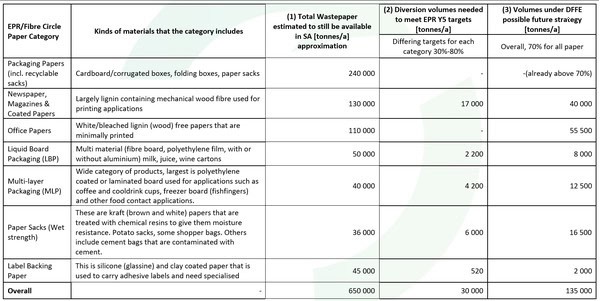
These product categories have various recycling and collection targets but require different recycling technologies and applications based on the fibre material, modifications and use case. Fibre Circle is currently investigating alternative diversion technologies at both industrial and local micro beneficiation scale to find solutions for the materials that are limited in recycling due to either the demand for the material or the nature of use or the composition.
As part of this strategy, we are expressing interest in exploring wastepaper as a potential feedstock to both industrial scale and local micro anaerobic digestion plants.
The aim is to identify viable feedstocks, evaluate the technical and economic feasibility of the application and to design and construct a micro scale AD biogas to electricity pod that can process food waste and wastepaper in more rural areas.
We realise that wastepaper is not the most ideal AD feedstock as the carbon to nitrogen ratio is very high, however the mixture of these materials together with food waste has the potential to work synergistically for AD by optimising moisture content and the C:N balance.
The ultimate aim is to develop this into a funding ready technical solution for certain wastepaper materials and food waste, which can be incorporated into the Fibre Circle waste beneficiation pilot project that focuses on enabling rural communities to recycle and generate value or benefit from all their waste materials.
We are working with multiple suppliers and developers to design solutions for valorising paper, plastic, food and electronic waste in containerised micro pod solutions.
The paper/plastic separation stage will produce clean paper fibre and plastic flakes that can be recycled or upcycled locally, however one challenge is to valorise the paper fibre that is extracted in areas where the logistics costs are prohibitive to feed into existing paper recycling mills. The goal is for the paper fibre together with food waste to be turned into electricity and warm water where feasible.
We therefore want to evaluate the feasibility of implementing this technology as the diversion route combined with composting to treat poor AD performing food and papers as well as the AD leachate.