












How ACTOM NECRT solutions are powering South Africa’s renewable energy expansion
As South Africa accelerates its transition to cleaner energy, the reliability and performance of grid‑connection equipment have become central to the success of large‑scale renewable projects.
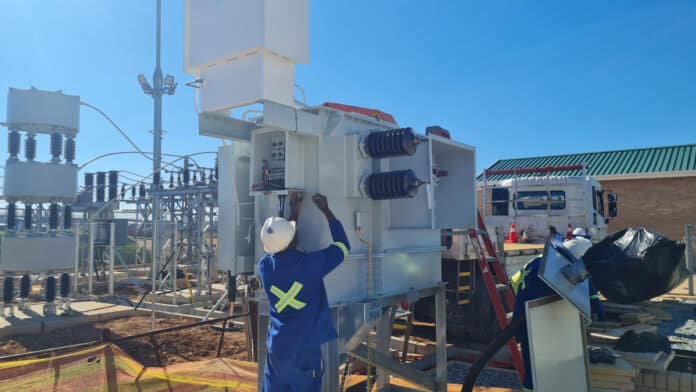
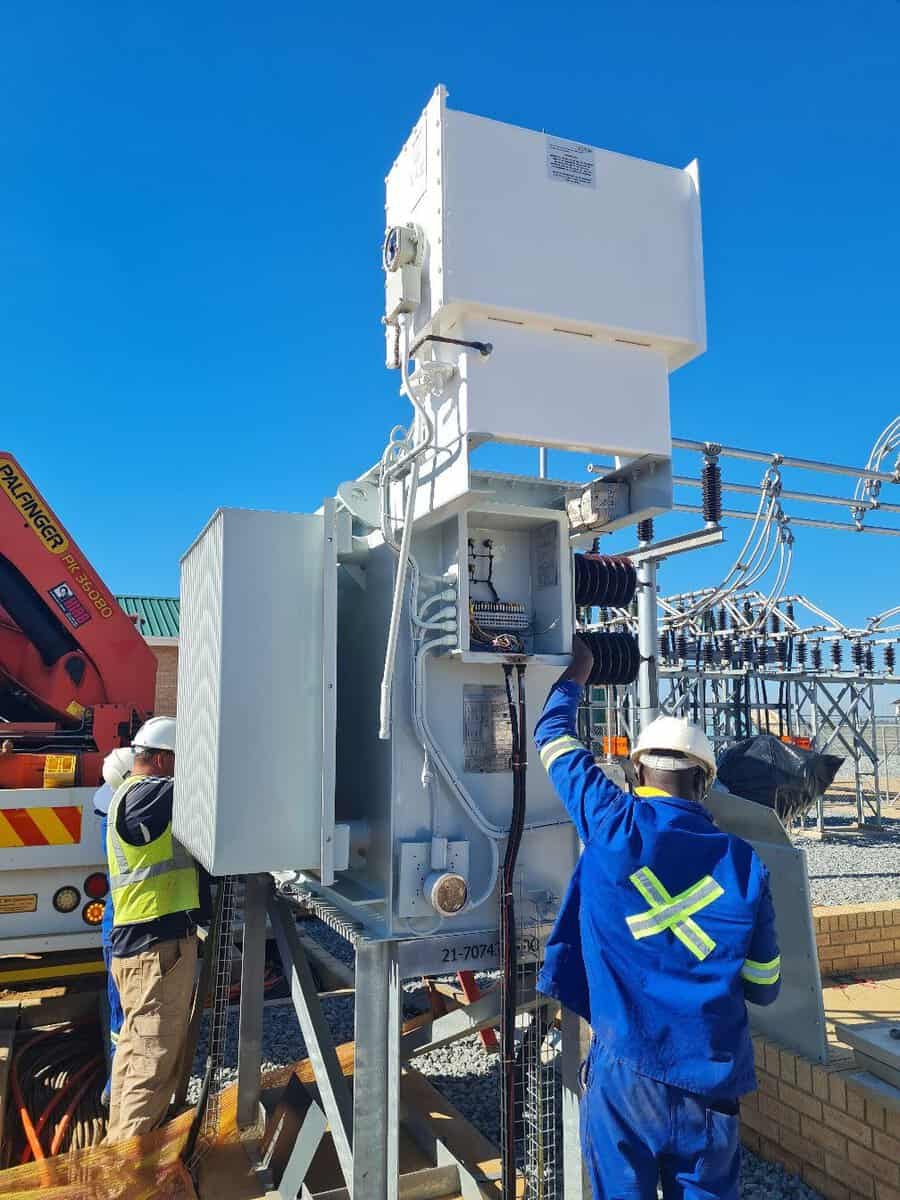
Among the most critical components in this ecosystem is the Neutral Electromagnetic Coupler with a Neutral Earthing Resistor and an integrated Substation Auxiliary Transformer (NECRT), which is a specialised unit designed to provide the neutral‑earthing and auxiliary supply functions required for safe, stable grid integration.
ACTOM Distribution Transformers, the sole 100% NECRT contract holder for Eskom, continues to demonstrate leadership in this space through its delivery of robust, fit‑for‑purpose solutions for several major renewable developments.
Milestones such as the recently completed 273-megawatt (MW) Grootfontein solar photovoltaic (PV) project in the Western Cape, as well as the successful supply of transformers to a solar project in Daamlaagte and Ilikwa PV, highlight the company’s engineering strength and its growing role in supporting South Africa’s renewable energy ambitions.
Critical component for solar‑plant grid integration
“NECRTs are indispensable in renewable energy collector substations, where they create the essential earth reference for delta‑configured power transformers,” explains Lee Mbenge, Divisional CEO of ACTOM Distribution Transformers.
“Without an NECRT, a solar or wind farm cannot energise, cannot synchronise with the grid and cannot generate power. This makes the NECRT a relatively small but absolutely critical component in the commissioning sequence of any renewable project.
At the Daamlaagte and Ilikwa Solar project, ACTOM’s NECRT solution plays a central role in ensuring stable and reliable power delivery. The unit provides controlled neutral‑earthing through its zig‑zag (Interconnected Star) winding and resistor assembly, while also supplying auxiliary power for substation operations. This dual functionality is vital in remote locations where no external low voltage supply is available.
“We manufacture the most reliable NECRT in the country; a unit that has been tried, tested and proven across every energised site. Our track record speaks for itself. We have had zero failures on all energised installations, and that level of reliability is exactly what large‑scale solar projects require,” says Mbenge.
Supporting project readiness through rigorous testing
The recent successful completion of Factory Acceptance Tests (FATs) for a high-profile project marks another important milestone for ACTOM. FATs are essential for verifying that each transformer meets the client’s technical specifications, performance requirements and safety standards before it leaves the factory.
“FAT gives the customer peace of mind. It confirms that the unit has been built to specification, that all routine, type or special tests have been completed, and that the transformer will perform reliably on site. In renewable energy projects, where timelines are tight and penalties are severe, FAT is a critical safeguard,” says Mawethu Ngubo, T&D Business Development Specialist at ACTOM.
He notes that for EPCs and IPP’s, this assurance is invaluable. Renewable energy projects operate under strict contractual deadlines, and any delay, especially on a component as critical as the NECRT, can halt commissioning and trigger significant financial penalties. By completing FAT’s on schedule and delivering units ready for installation, ACTOM ensures it is never the bottleneck in a project’s path to energisation.
Engineering for renewable energy conditions
Renewable energy plants expose transformers to elevated harmonic content from inverter‑based generation. Harmonics accelerate ageing, increase losses and can lead to premature failure. ACTOM’s NECRT’s are engineered to withstand these conditions, ensuring long‑term reliability and grid‑code compliance.
“We design and build NECRT’s robust enough to perform under the demanding conditions of renewable energy sites. As the sector expands, developers know they can rely on ACTOM for a product that meets Eskom’s standards and performs reliably in the field,” says Mbenge.
This robustness is not theoretical, as ACTOM’s NECRTs have been deployed not only across South Africa but throughout the region, including Eswatini, Botswana, Namibia, Zambia, Zimbabwe, Mozambique, the DRC and now Sierra Leone.
Mbenge points out that the company’s ability to supply Eskom‑grade units at short notice has also helped rescue several projects where developers underestimated the specification requirements or omitted the NECRT entirely.
Enabling South Africa’s renewable‑energy future
As South Africa scales up its renewable energy capacity, the demand for reliable, grid‑compliant transformer solutions will continue to grow. ACTOM’s NECRT technology, engineered in‑house, rigorously tested and proven across the region, is already playing a pivotal role in enabling this expansion.
“Although the NECRT is a small line item, it has huge significance. If it’s late or unreliable, the entire project stands still. Our job is to ensure that never happens, and that developers receive a product they can trust,” says Ngubo.
With successful deployments at major green energy projects across South Africa, ACTOM continues to demonstrate why it remains the preferred NECRT supplier to the country’s renewable energy sector.