











Namibia Oil Discovery: What it means for South Africa’s energy security
By Adrian Ephraim
AS fuel prices continue to climb and South Africa’s energy crisis deepens, Namibia’s massive offshore oil find is set to reshape the regional energy landscape. The Venus discovery in the Orange Basin, estimated at 5.1 billion barrels and the largest ever in sub-Saharan Africa, is advancing toward production, strengthening Namibia’s position as a future energy hub. Meanwhile, South Africa’s reliance on imported fuel is increasing, raising urgent concerns about long-term energy security and supply stability.
From 1 April, South Africans have faced one of the sharpest petrol and diesel price hikes in recent years, driven by elevated Brent crude prices, a weaker rand and rising fuel levies. Yet the immediate pain at the pump underscores a broader structural weakness: declining domestic refining capacity, rising import reliance and limited upstream oil development, even as the Orange Basin’s geological potential may extend into South African waters.
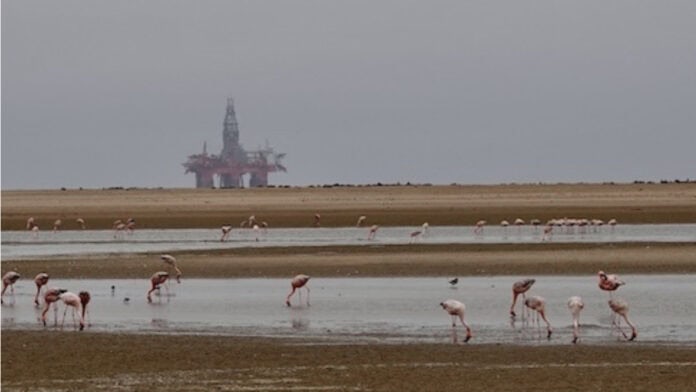
In February 2022, TotalEnergies drilled the Venus-1X well approximately 290 kilometres off the Namibian coastline in the Orange Basin, confirming an estimated 5.1 billion barrels of light, sweet crude – the largest sub-Saharan oil discovery in Africa’s history. A Final Investment Decision (FID) is targeted for the fourth quarter of 2026, with first oil planned for 2029. The development concept centres on a 160,000-barrel-per-day FPSO vessel. Subsea contracts alone are estimated to exceed $2.5 billion.
Namibia’s Petroleum Commissioner, Maggy Shino, has made clear that the timeline is firm and the intent unambiguous.
“We are confident in TotalEnergies’ ability to navigate these challenges and deliver a final investment decision by 2026,” Shino told the Invest in Africa Energy Forum, in Paris last year.
TotalEnergies Chairman and CEO Patrick Pouyanné reinforced the ambition in January 2026, following a high-level meeting with Namibian President Netumbo Nandi-Ndaitwah in Windhoek.
“By aligning our strengths across both Venus and Mopane, we are laying the foundation for a new energy hub in the region – one that combines operational excellence, local development and shared prosperity,” Pouyanné said.
The Orange Basin straddles the maritime boundary between Namibia and South Africa. The two countries share a land border, a power grid relationship through the Southern African Power Pool, and operate within the same SADC economic architecture.
From this month, South Africans face one of the most severe fuel price shocks in the country’s post-apartheid history.
Speaking at the Southern Africa Oil and Gas Conference in Cape Town in March, Mineral and Petroleum Resources Minister Gwede Mantashe was blunt about what the crisis exposes.
“Countries that rely heavily on imports of refined petroleum products remain particularly vulnerable to global market shocks. The sustainable long-term solution to our challenges lies in domestic production. South Africa must not stand on the sidelines while the global energy landscape evolves and while our neighbouring countries unlock the value of their resources, “Mantashe told the conference.
Mantashe himself has acknowledged the geological logic: SA has considerable offshore petroleum potential, and geological evidence suggests the Orange Basin’s productive structures may extend southwards into South African waters.
As Namibia advances toward becoming a major oil producer by the end of the decade, South Africa faces a pivotal policy choice: remain dependent on imported fuel and vulnerable to global oil price shocks, or accelerate upstream exploration and domestic energy development.
The regional energy shift is already underway. The question is whether South Africa will move in step – or watch from the sidelines as Namibia reshapes southern Africa’s oil and gas landscape.