













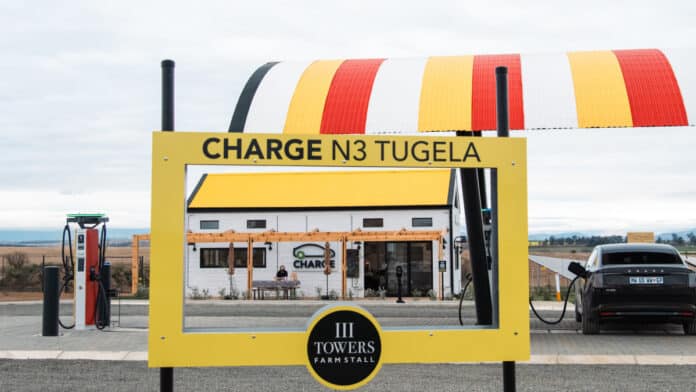
World EV Day: CHARGE puts real-world EV performance to the test on the N3
TO mark World EV Day on 9 September 2026, Zero Carbon Charge (CHARGE) launched the N3 EV Real-World Test, an initiative that will turn everyday electric vehicle journeys between Johannesburg and Durban into a growing source of real-world data for South African motorists and fleet operators considering the switch to electric.
The initiative aims to establish a single source of information for the real-world performance of both passenger and commercial electric vehicles, using one consistent test route, the CHARGE N3 Test Route, to create a benchmark against which different EVs can be compared over time.
While prospective EV buyers have access to manufacturer specifications on range, battery capacity, and efficiency, these figures do not always tell motorists and fleet owners what they most want to know: how an EV will actually perform on a South African long-distance journey under real road, weather, and driving conditions. CHARGE wants to help answer that question.
EV owners travelling between Johannesburg and Durban are being invited to use the N3 as a benchmark test route by using the two charging hubs that CHARGE has opened on the highway – CHARGE N3 Roadside at Leeukop Padstal in the Free State and CHARGE N3 Tugela at Three Towers Farm Stall in KwaZulu-Natal.
The hubs, which operate entirely off-grid using solar-powered microgrids and battery storage, currently have 360kW charging capacity, with upgrades to up to 720kW planned. This high-capacity infrastructure is designed to meet the charging needs of both passenger and commercial EVs, including vehicles capable of ultra-fast charging, providing a more accurate picture of real-world charging performance.
In exchange for sharing their vehicle and journey data, participating drivers who sign up for the initiative will receive CHARGE credits to cover their charging costs on the N3 test route.
Joubert Roux, CHARGE Co-Founder and Chair, says, “Motorists and fleet operators want to know what range they can realistically expect on the open road, how much energy a vehicle uses between Johannesburg and Durban, and how factors such as elevation, weather and driving conditions affect performance. The best way to answer those questions is to start building a body of South African real-world data. Ultimately, we want potential buyers to be able to compare apples with apples. By testing passenger and commercial EVs on the same route and collecting actual driving and charging data, the CHARGE Test can establish a consistent South African benchmark that consumers and businesses can use to make more informed decisions.”
Once participants sign up through the CHARGE website and download the CHARGE app, they receive a free charging voucher linked to their account and have two months to complete their N3 EV Test. During the journey, charging data from participating vehicles, including charging duration, energy delivered (kWh), charging speed and charging session information, will be collected. Participants will also complete a short post-test questionnaire to provide additional information about their vehicle and journey
Rather than attempting to compare vehicles under artificial or identical test conditions, the project is designed to capture the reality of EV ownership. Different cars, drivers, loads, weather conditions and driving styles will all contribute to a growing picture of how electric vehicles perform on one of South Africa’s major intercity routes.
“One trip gives us one data point. Hundreds of trips across different vehicles and conditions begin to give South African consumers something much more useful,” said Roux.
Once sufficient test data has been collected, CHARGE will publish aggregated results on its website, creating an accessible real-world resource for prospective EV buyers, fleet operators, existing EV owners, vehicle manufacturers and the wider electric mobility industry.