
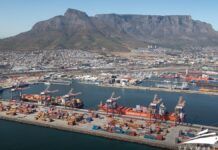











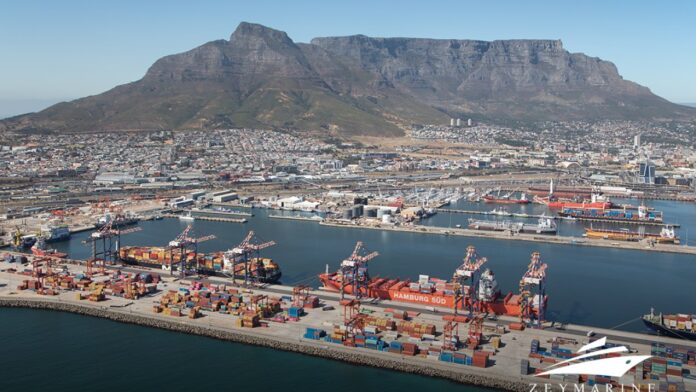
Port of Cape Town improvements face their real test in the next fruit season
By Adrian Ephraim
For an industry that lives and dies by whether a container reaches an international customer on time, a global ranking that labels the Port of Cape Town one of the worst in the world was always going to sting. But the City of Cape Town’s economic growth chief says that headline number was never the point and that the true measure of the port lies somewhere far more practical.
Alderman James Vos, Mayoral Committee Member for Economic Growth, has spent years pressing national government to reform a port he calls one of the biggest constraints on economic growth in the Western Cape. His letter to Transport Minister Barbara Creecy, he says, was not a complaint about a ranking. It was a list of fixes.
“My letter was not simply a complaint about a ranking,” Vos says. “I put forward practical measures that I believe can help improve the performance of the Port of Cape Town.” Those measures included accelerating private sector participation, improving equipment reliability, strengthening digital cargo planning, building skills capacity and lifting terminal productivity.
He has since had movement to point to. Transnet has called for a private partner to finance, redevelop and operate the multipurpose terminal under a 25-year concession, following similar processes for the liquid bulk and cold storage terminals. “That is significant, and it is exactly the direction of reform the City has been advocating for,” Vos says. But he is careful to separate an announcement from a result. “Announcing a process and delivering an operational partnership are two different things.”
A flawed yardstick
On the World Bank ranking that put Cape Town near the bottom of more than 400 container ports, Vos sides, at least partly, with the freight forwarders who called it misleading. The South African Association of Freight Forwarders argued the index measures only vessel time in port and ignores throughput, cargo dwell time, landside evacuation and cost.
“I think SAAFF makes an important point,” Vos says. “The Container Port Performance Index is one indicator. It measures an important part of port performance, but it does not measure the entire logistics chain. So I would certainly not argue that we should judge the Port of Cape Town on that ranking alone.”
What businesses actually care about, he argues, is a basket of measures: vessel turnaround, crane productivity, truck turnaround, cargo dwell time, cold chain reliability, rail utilisation and the final cost to the cargo owner. “The World Bank ranking can tell us something, but the experience of the exporter trying to get fruit, wine or manufactured goods to an international customer tells us much more.”
Welcoming the gains, without declaring victory
Vos readily acknowledges the port is improving. Transnet has reported ship turnaround at the container terminal falling from 103 hours in 2023/24 to 83 hours the next year and then to 74 hours in 2025/26, with container volumes in the first quarter of 2026/27 running 16% higher than the year before.
“Those are positive developments and we should recognise them,” he says. “But improvement from a low base is not the same thing as having a globally competitive, consistently reliable port.” His concern is whether the gains survive the pressure of peak export season, when volumes and Cape Town’s high winds test the whole system at once.
The number that really matters
Ask Vos for the evidence behind his push for reform and he moves quickly past the ranking to the provincial balance sheet. Western Cape Government research estimated the port’s container logistics chain contributes around R69 billion to provincial GVA and sustains roughly 225,000 jobs. An efficient port, the same research found, could unlock about R6 billion in additional exports and 20,000 more jobs.
The cost of failure is just as concrete. During the 2025/26 season, around 55,000 tonnes of Western Cape table grapes were diverted to Eastern Cape ports, dropping Cape Town’s share of table grape exports from 90% to 76%. Industry put the hit to the table grape sector at about R3.2 billion, with stone fruit losing a further R1.05 billion.
“Exporters were putting produce on trucks and moving it hundreds of kilometres to another port because they needed to protect access to international markets,” Vos says. “That is a very real business decision.”
So how will he know reform has worked? Not from a government statement, and not from a ranking. “Does the business owner notice the difference?” he asks. “If exporters can move more products through Cape Town, more reliably and at a competitive cost, then we will know the reforms are working.”