









Cape Town water security projects reshape the city’s future with R43 billion investment
By Adrian Ephraim
Eight years after Day Zero taught Cape Town what it means to count down to empty taps, and with dam levels at 75.7%, the City is spending its way to never facing that reckoning again. Water and sanitation now make up 42% of Cape Town’s R120 billion 10-year infrastructure pipeline, roughly R43 billion over the next three years, a bigger water build than Johannesburg and Durban combined.
At the centre sits the New Water Programme, the City’s plan to add 300 million litres of drinking water a day from sources that do not depend on rain. Reuse, desalination, groundwater and clearing thirsty invasive plants all feature. And in late September 2026 the programme moved from planning into the market, opening real opportunity for engineering, technology and services firms.
Faure goes to market
On 25 September the City published the tender for its flagship reuse project, the Faure New Water Scheme, a two-stage process to find a private partner to finance, design, build, operate and maintain the scheme. The project is valued at around R2.83 billion and will eventually produce up to 100 million litres a day, starting at 70.
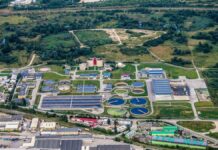
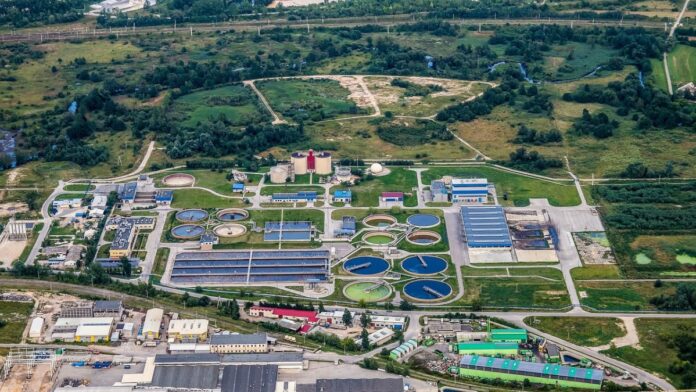
The engineering is ambitious. Treated effluent from the recently rebuilt Zandvliet Wastewater Treatment Works will be purified through a multi barrier advanced water purification plant at the Faure Water Treatment Plant, blended with dam water, then treated again before reaching taps across most of the city.
“The Faure New Water Scheme forms part of our broader approach to diversifying our water supply and strengthening our resilience as the city grows,” said Councillor Zahid Badroodien, Mayoral Committee Member for Water and Sanitation.
He has been clear that the public-private partnership model keeps the asset in public hands. “By undertaking these projects through a PPP, the City of Cape Town will remain the infrastructure owner and be responsible for providing safe, high-quality drinking water,” he said when Council approved the model in December 2025. “This is progress built on trust, delivering jobs, economic opportunity and the certainty our residents and businesses deserve.”
Where the supplier opportunity lies
An industry briefing prepared through GreenCape mapped the work the Faure scheme alone will generate: storage reservoirs, pump stations, oxidation and filtration systems, disinfection, HVAC and control systems, plus an eight kilometre DN1000 transfer pipeline between Zandvliet and Faure. Contractors with civil, mechanical and electrical, control and instrumentation expertise are all in the frame.
Specialist firms are already circling the programme. Engineering consultancy Zutari was appointed for the environmental work on the desalination component, while design studio Stewart & Partners developed an early concept for the Faure reuse plant. The transaction advisory team guiding the feasibility work was appointed through National Treasury’s Government Technical Advisory Centre, and an independent panel of 12 local and international desalination experts has been assembled to steer the seawater plans.
The desalination setback
Not everything is on track. The second flagship, the roughly R5 billion Paarden Eiland Desalination Plant, planned for up to 70 million litres a day, has hit a serious obstacle. Transnet’s intention to expand the Port of Cape Town has effectively scuttled the chosen Paarden Eiland site.
Tabling the Water Outlook report in August, Badroodien told Council the search was on for alternative locations. The report warns that finding a new site and running a fresh environmental impact assessment, the scoping for which was already done at Paarden Eiland, could push the project back by five years. On current timelines the full New Water Programme may only be operating around 2036, even as demand is expected to outstrip the city’s dam allocation within the next two years.
Cost is the other sensitivity. Badroodien has acknowledged that all capital projects feed into tariffs, with earlier modelling suggesting desalination could add roughly 6.5% to water tariffs in its first years of operation. Residents and ratepayer groups have raised concerns, and that debate will sharpen as procurement advances.