







Steel fabrication Western Cape: Saldanha plant boosts capacity
By Kris van der Bijl
A new metal-processing plant at Freeport Saldanha adds advanced cutting and forming equipment to the Western Cape’s steel industry. But local industry experience points to continuing gaps in some types of heavy fabrication and specialised machining, alongside shortages of technical workers needed to carry out the work.
Expanding regional fabrication capacity involves more than machinery. While the EOT Solutions plant is capable of growing both local fabrication capacity as well as supporting jobs in the region, the entire metal-processing industry must be considered.
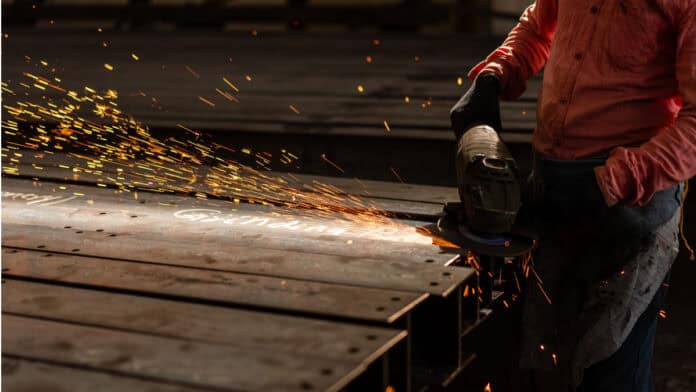
EOT Solutions opened the plant on 9 September, establishing it with partners Nine Dot Solutions and Saxeni Project. Its equipment includes computer numerical control (CNC) fibre-laser cutting, profiling and press-brake machinery. The Western Cape Government describes the fibre-laser cutter as one of the largest in South Africa.
A potential second phase could increase total investment to approximately R70 million and double direct employment to around 30, according to the provincial government’s announcement.
Not all fabrication capacity is the same
Michael Papanicolaou, Chief Executive of Union Steel and a Western Cape member company of the Southern African Institute of Steel Construction (SAISC), says the province has established capabilities in light and medium structural steelwork, but more limited capacity for certain types of heavy fabrication and specialised machining.
Larger or specialised projects may consequently require additional capacity from elsewhere in South Africa, with the associated work and spending going to fabricators in other provinces.
SAISC’s broader industry view is that expanding regional capacity requires investment, sustained market demand and skilled labour.
The Saldanha investment adds metal-processing equipment to the region’s industrial base, while the wider question for fabricators is whether they can combine machinery, expertise and production capacity to compete for different types of projects.
The specific skills in short supply
Papanicolaou says Union Steel struggles to recruit experienced steelwork detailers, draughtspeople, workshop supervisors, boilermakers and CNC operators. Workshop-based coded welders are reportedly more readily available in the region.
The shortage is not uniform across trades. Steel fabrication requires people to prepare technical drawings, coordinate workshop production and operate machinery, as well as weld and assemble components.
SAISC identifies continued technical training and closer collaboration between design engineers and fabricators as priorities for strengthening industry capability and improving project efficiency.
Competing on more than production price
Western Cape fabricators bidding for projects in South Africa’s northern mining and industrial regions may face additional logistics and inspection costs, according to Papanicolaou. Distance from major project clients and engineering teams can also influence overall project costs.
SAISC assesses competitiveness against both domestic fabricators and imported fabricated steel through total delivered cost, technical capability, production capacity, quality and reliable execution.
For regional businesses, the commercial challenge is therefore broader than acquiring equipment. They need the skills and production capabilities to meet project requirements, alongside the ability to deliver work reliably and at a competitive total cost.
SAISC’s position is that building regional fabrication capacity requires investment to be matched by skilled labour and sustained demand