













Credit Guarantee Vehicle set for South Africa launch in 2027
By Larry Claasen
THE move to create an insurance type company, which will provide billions in cover for much of South Africa’s R1,07 trillion infrastructure build will take place earlier next year.
This new entity takes over the government providing billions of rands in credit guarantees for public-private projects, like the construction of new power transmission lines.
These guarantees commit the state to repaying the loans of private companies if those companies default. They enable private companies to access finance, manage trade risk and protect cash flow. They do, however, pose a risk to taxpayers, because the state commits to carrying the risk if a company cannot repay its loans.
This commitment has far reaching implications because it has seen the national government commit to providing R303,1 billion in guarantees to independent power producers.
A new coverage model
As a way to reduce its exposure, the government is creating the Credit Guarantee Vehicle (CGV), which will initially be funded by the government, the World Bank, and several other development funding institutions.
Once the CGV is up and running, it will require participating companies to pay guarantee premiums and also open itself up to the private sector to fund it.
The National Treasury has committed R2 billion to it, the World Bank is investing about R9 billion and other institutions are expected to contribute as much as R6,65 billion to its capitalisation.
The Development Bank of Southern Africa (DBSA) is not directly investing in the CGV but is hosting its Project Implementation Unit, which is responsible for supporting the development and operationalisation.
Delayed until 2027
The plan was to launch the CGV in the second half of 2026, at the same time Final Request for Proposals (RFP) for Phase One of its Independent Transmission Projects (ITPs) Programme, but both have been delayed till 2027.
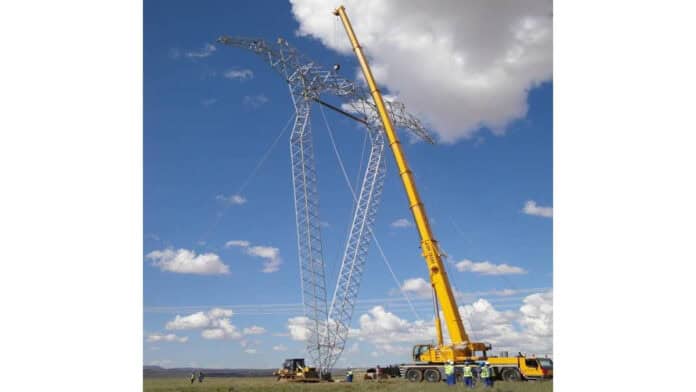
The start of the transmission programme, which will see the construction of 11,400 km new power transmission lines over the next 10 years, was pushed back. This was to ensure that the ITPs were appropriately structured, commercially bankable and capable of attracting competitive, high-quality bids.
The government said it decided to hold a further targeted, time-bound consultation and issue a second draft RFP package before the Final RFP, to identify and address remaining material bankability issues.
In a joint statement, the Department of Electricity and Energy (DEE) and National Treasury said the second draft is expected to include a draft non-binding CGV term sheet, so bidders and lenders can assess the credit enhancement framework alongside the wider transaction.
Lenders seek regulatory and payment-security clarity
The move from state backed guarantees to a CGV is proving itself to be lengthy and technical. This is because it requires the buy-in of lenders, which need the assurance of the regulatory, contractual and payment security framework to assess the projects.
DBSA chief investment officer Greg Fyfe told CBN that the CGV has been set up and that capitalisation of it was in progress, and that process would be completed by the end of March 2027. Once this was completed, “it would be in a position to be formally launched.”
Governance and licensing under way
So far, a steering committee, caretaker board and advisory board for the CGV has been set up and it was registered and incorporated on 12 August 2026, with its statutory directors, auditor and corporate secretariat appointed.
The licensing process for the CGV is currently underway following submission of the licence application to the South African Reserve Bank’s Prudential Authority. At the same time the recruitment and development of the CGV’s operating policies and procedures is also in progress.