








Cape Town Manufacturing Support Policy faces wider industry challenges
By Kris van der Bijl
CAPE Town’s Manufacturing Support Policy offers qualifying investors relief from municipal fees and approval processes, but manufacturers face a wider set of cost, infrastructure and regulatory constraints that the City’s incentives cannot address on their own.
The Manufacturing Support Policy extends the City’s support from six industrial areas to all 33.
Approved by Council on 31 March 2026 and launched on 26 May, it is intended to encourage new manufacturing investment rather than reward businesses relocating within Cape Town.
Qualifying projects can access a dedicated City facilitator and waivers of land-use, building-plan and wayleave fees. The policy also provides for faster processing of qualifying applications.
The distinction between municipal incentives and the broader conditions affecting manufacturers is central to the assessment offered by Jacques Moolman, president of the Cape Chamber of Commerce and Industry.
He argues that improving competitiveness requires coordinated action by multiple players, not just the metro.
Manufacturers face constraints beyond municipal approvals
Moolman said the industrial environment was constraining efficiency and scale, while manufacturers struggled to generate sufficient returns from their productive assets.
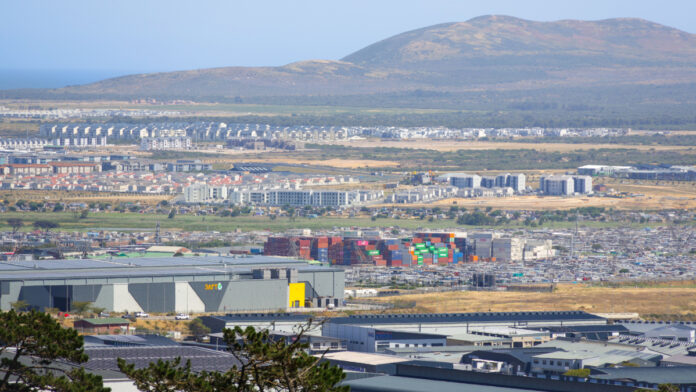
He identified high factory rentals and basic-service costs at firm level, crime and logistics disruptions in industrial precincts, and labour-market policy and ineffective industrial policy implementation at regional level.
The Chamber’s Business Environment Surveys, conducted with the Bureau for Economic Research at Stellenbosch University, provide its evidence on business conditions. The latest survey, completed earlier this year, found manufacturers were, according to him, “severely constrained by a dual burden of firm-level regulatory compliance and precinct-level infrastructure failures”.
The City’s fee waivers and faster approvals address some of the administrative and cost barriers associated with municipal processes. They do not resolve the wider pressures identified by the Chamber, which also require action from other stakeholders.
Moolman said the Chamber’s approach was to establish the nature and extent of constraints through manufacturer data, identify the stakeholders responsible and facilitate discussions on possible solutions.
City’s policy impact still to be measured
Alderman James Vos, the City’s Mayoral Committee Member for Economic Growth, told CBN it would be “premature” to provide verified uptake figures before formal monitoring and verification.
The policy is in its first year of implementation, and the City expects to report more comprehensive information on uptake and impact after its first annual reporting period. A draft standard operating procedure for implementation is being finalised.
Vos said the City had received positive interest from manufacturers and investors, including businesses in the Atlantis industrial area, with “indications of early uptake and enquiries”.
The City’s work since launch has focused on awareness and engagement. It listed various activities spanning five months, from staff orientation to a stakeholder workshop. Other engagements included a manufacturing business breakfast and a presentation at an NCPC/Atlantis Special Economic Zone workshop.
The City’s figures of 15 948 direct jobs and R18.9 billion in investment for 2025/26 relate to its wider sector partnerships, not verified results attributable to the manufacturing policy.
Moolman said the Chamber could not comment meaningfully on the policy’s success without data, while welcoming efforts to support and expand manufacturing. He called for a more aggressive and holistic approach covering the entire business environment and manufacturing value chain.
The policy’s first annual reporting period should provide a basis for assessing uptake. Its broader economic impact will need to be considered alongside the wider conditions affecting manufacturers’ competitiveness.