











South Africa gas cliff threatens industry as calls grow for urgent state action
By Larry Claasen
SOUTH Africa’s industrial gas consumers are calling on the government to meet with them as part of their efforts to avert the “gas cliff.”
The Industrial Gas Users Association of Southern Africa (IGUA-SA) says it wants to work with the government to come up with joint solutions as a way to secure the supply of gas into the country. The term “gas cliff” refers to the sudden and severe reduction in gas availability expected once Sasol begins limiting supplies from its Mozambique operations to its Secunda facilities.
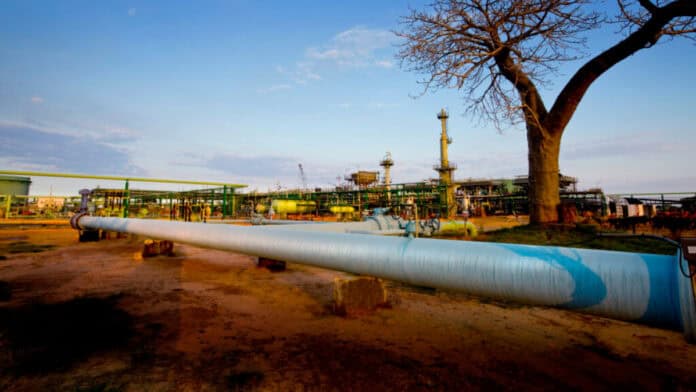
IGUA-SA is looking at ways to ensure that its members continue to get a supply of gas once Sasol starts limiting supply to its Secunda operations from Mozambique in June 2028. Sasol has been the country’s primary industrial gas supplier for decades, but declining reserves in Mozambique have forced it to prioritise its own feedstock needs.
Without this supply, there are concerns that industries that directly employ 70 000 people and contribute between R300 billion and R500 billion annually to the economy would be severely affected. Sectors such as chemicals, ceramics, glass, metals, and food processing are particularly dependent on a reliable gas supply for their furnaces and production lines.
Though the government has said it takes the gas cliff seriously, IGUA-SA executive officer Jaco Human said it has not met with the state on the matter in about two years.
In its recently updated Gas Roadmap for South Africa 2025–2042, IGUA-SA reiterated its call for the government to work with it to come up with a solution to the looming gas shortage. The roadmap outlines a series of urgent interventions, including the development of liquefied natural gas (LNG) import infrastructure and the acceleration of regional pipeline projects.
It noted that “the gas shortfall is not inevitable – it is a solvable national challenge. Success depends on urgent alignment between government and industry to aggregate demand, provide sovereign or state-sponsored guarantees through blended-finance and shared-risk platforms, and commit to executable LNG and regional gas development programmes.”
It wants to see the creation of a Presidency-mandated National Gas Task Team empowered to deliver an integrated action plan by 2026 that bridges the short-term gap while building long-term resilience. Such a task team would, according to IGUA-SA, have the authority to cut through bureaucratic silos and fast-track decisions.
For his part, despite underlining the seriousness of the issue, there was no mention of setting up such a task team in Minister of Electricity and Energy Kgosientsho Ramokgopa’s budget speech in May.
“South Africa must also confront the gas cliff with urgency and clarity. Gas supply constraints affect industrial users, petrochemicals, manufacturing, investment decisions and regional energy logistics. They also affect the ability of the electricity system to access flexible and dispatchable capacity,” said Ramokgopa.
The roadmap said it needed “political sponsorship and leadership to address this challenge,” but had yet to see evidence of this. “The response to the gas cliff remains fragmented, with no clearly empowered national vehicle to align priorities, resources, and timelines,” the document added.
It argues that the setting up of a National Gas Task Team would provide much-needed coordination between the state and the private sector, as it would have the authority to coordinate between different departments, regulators, state entities, and industry participants across the entire gas value chain.
Though the government has responded to the crisis with the Integrated Resource Plan (IRP2025), the Gas Master Plan, and Gas Cliff mitigation statements, IGUA-SA said these responses were “aspirational in nature,” as they needed an operational framework. Without such a framework, there was no way to put these plans into action.
Though the industry has responded to the crisis by creating a platform company, or aggregator, that would source gas on behalf of IGUA-SA, it said it still needed government support. “The private sector cannot bear the full burden of risk required to secure new gas infrastructure and supply without government support. Collaborative intergovernmental solutions are essential for safeguarding industry and the economy,” the roadmap said.
The aggregator, named GasHub, was created in November 2025. According to the roadmap, it creates the market scale necessary to attract international LNG suppliers and secure favourable long-term supply agreements. IGUA-SA says it provides critical risk diversification, spreading supply chain vulnerabilities across multiple sources and supply routes while maintaining the operational flexibility each member requires for their specific industrial processes.
