











EPR changes how SA businesses deal with old appliances
By Tarryn-Leigh Solomons
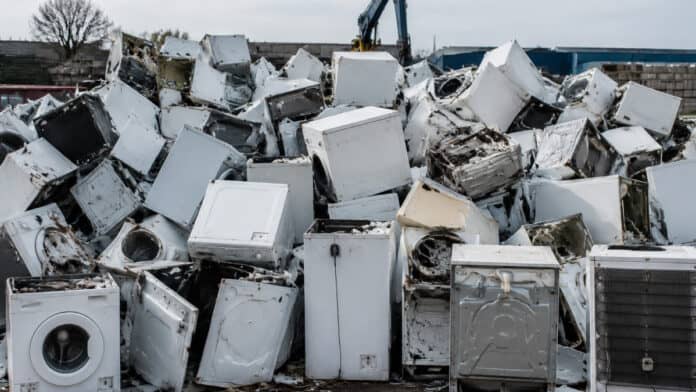
SOUTH Africa’s appliance manufacturers and retailers are having to account for what happens to products long after they leave the shop floor.
Under Extended Producer Responsibility (EPR), producers, importers and brand owners carry responsibility for products at the end of their useful lives, bringing collection and recycling into the cost of doing business.
For white goods such as fridges and washing machines, this has implications for everything from product design and repairability to take-back systems and reverse logistics.
Chris Bischoff, Managing Director of the Sustainability Communication Company, said responsibility is now shared across the value chain.
“Under the Extended Producer Responsibility regulations, producers, importers and brand owners are legally accountable for their products once they reach end-of-life, not the consumer or the municipality alone,” he said.
In practice, this includes funding and coordinating collection and recycling through registered Producer Responsibility Organisations (PROs).
Consumers still have a role in handing unwanted appliances over responsibly. Bischoff said e-waste has been banned from landfill since 23 August 2021.
“The obligation to close that loop sits firmly with those who put the product on the market.”
EPR changes the cost equation
For manufacturers, EPR means considering end-of-life costs much earlier in a product’s lifecycle.
“EPR makes the end of a product’s life a live commercial and legal concern from the moment it’s designed,” Bischoff said.
Producers carrying collection and recycling costs have a financial reason to consider how long appliances last and how easily they can be repaired or dismantled.
Retailers face a different operational challenge.
“Retailers are having to build take-back and reverse logistics into operations that were only ever set up to move stock outward,” he said.
Bischoff said take-back systems can also recover materials, generate data needed for reporting and provide another point of contact with customers.
Collection remains a weak link
The system still depends on getting unwanted appliances into formal collection and recycling channels.
Bischoff said many households do not know where to take a fridge, washing machine or other appliance once it is no longer usable.
“Convenience shapes behaviour far more than good intentions,” he said.
Product design also affects how quickly appliances become waste. Bischoff pointed to longer-lasting products, access to spare parts and repair options as ways to extend their useful life.
He said the “right to repair” debate matters, while waste pickers and smaller collectors already recovering e-waste should be brought more formally into the system.
Companies need to prove where waste goes
For businesses reporting on waste targets, traceability is another consideration.
“Without documented traceability, there’s no way to prove material didn’t end up in landfill,” Bischoff said.
Companies should be able to establish who processed their e-waste and what was recovered or disposed of. He said this means working with licensed, audited recyclers and obtaining certificates and downstream reporting.
Claims such as “zero waste to landfill” also need evidence.
Bischoff said businesses should account for how much material entered the system and where it ultimately went, including material that could not be recycled. He said independent verification should support these claims.
Recovering value from old appliances
End-of-life appliances can also contain materials with a resale or recovery value.
Fridges, circuit boards and other electrical products contain steel, aluminium, copper and other metals that can be recovered, a practice often referred to as “urban mining”.
“Too many businesses still see an end-of-life appliance as a disposal cost rather than a source of value. This is a missed opportunity,” Bischoff said.
The economics depend partly on how products are made. Appliances that are difficult or costly to dismantle make material recovery less viable.
Bischoff expects that calculation to shift as EPR internalises end-of-life costs and material prices rise.