










Karoo shale gas revival gains momentum as South Africa lifts development moratorium
By Larry Claasen
The government is not only moving to lift the moratorium on shale gas development but has also allocated R48,1 million specifically for the implementation of the Karoo Shale Gas Project.
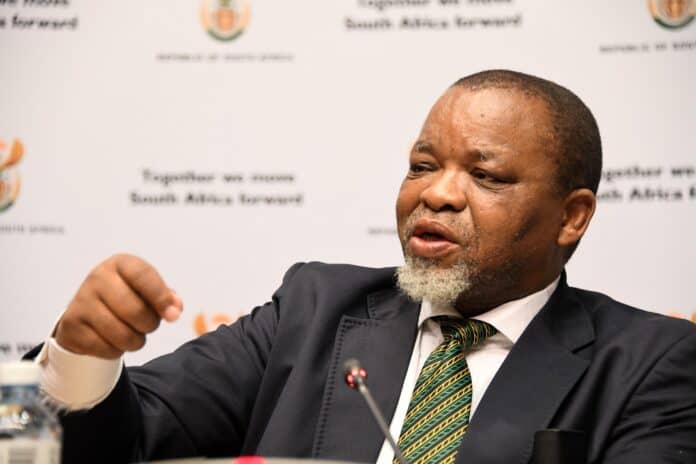
Minister of Mineral and Petroleum Resources, Mr Gwede Mantashe, said in his budget 2026/27 speech in May that the country was committed to energy exploration as it “was overly dependent on imported refined petroleum products.”
Mantashe’s remarks followed the government’s announcement in March that it planned to lift its long-standing moratorium on shale gas development. The moratorium was put in place in 2011 to allow for the creation of environmental and hydraulic fracturing (fracking) regulations. At the time, environmental groups welcomed the pause, citing concerns over water contamination and seismic activity, while industry bodies argued it stifled investment.
The move to lift the moratorium is the latest indication by the government that it wants to deal with the roadblocks holding up energy exploration. The moratorium announcement, for example, came after Minister of Forestry, Fisheries and the Environment, Willie Aucamp, said his department was moved to end “decision paralysis” on offshore oil and gas exploration appeals. “We have a legal and constitutional obligation to take decisions that promote inclusive economic growth and job creation, without compromising our constitutional mandate of protecting our environment,” Aucamp said.
The lifting of the moratorium opens the way for the development of shale gas resources in the South African Karoo Basin, which is estimated at 370 trillion cubic feet (Tcf), according to the Petroleum Agency SA (PASA).
After years of delays, the Karoo Shale Gas Project is gaining momentum, as PASA – a service provider to the Department of Mineral Resources and Energy – issued a tender in February to assess how much of the gas can be recovered.
PASA said at the time that it sought “to appoint a suitably qualified and experienced service provider to develop and apply a valuation methodology for determining the recoverable amount of shale gas–related intangible assets recognised under Shale Gas Phase 2 of the Karoo Basin project.”
According to PASA, the Karoo Shale Gas Project comprises five work packages: Karoo Deep Drilling; Petroleum Resource Evaluation; Baseline Groundwater Monitoring Network; Risk Assessment of Abandoned Wells; and Baseline Seismicity Monitoring Network. Each package is designed to address specific technical and environmental challenges, ensuring that any future extraction meets rigorous safety standards.
Though shale gas in the Karoo has long been seen as an answer to South Africa’s energy needs, the country has recently begun exploring the extent of petroleum resources in the Karoo. In late 2025, the government said it had completed the first phase of its investigation into the extent of petroleum resources of the Karoo for possible extraction. It said at the time that it had concluded 85% of Phase 1 of the survey for its Shale Gas Project in the Karoo Basin following what it described as the discovery of “microseepage of oil in the basin.”
The move to explore for gas and petroleum in the Karoo and offshore came as there was growing concern in government not only about securing supply but also about the sharp rise in crude oil prices resulting from the crisis in the Middle East.
Mantashe said in his budget speech that the government had sufficient fuel supply to meet demand, but becoming more self-sufficient was something the country had to embrace when it came to energy security.
“It is neither sustainable nor just for a country with significant mineral and petroleum potential, such as ours, to remain exposed to external supply shocks in this manner,” he said.
He added that petroleum security was not a theoretical debate, but an economic necessity and a national imperative.