









Water independence starts with what you can deploy tomorrow
By Dawid Bredenkamp
AS pressure on water resources continues to grow, flexibility is becoming less of a luxury and more of a practical necessity. Sometimes resilience is not about building bigger. It is about having the right solution ready when circumstances change.
South Africa already knows what prolonged shortage looks like. Cape Town’s Day Zero threat showed how quickly taps can run dry when drought bites. With a strong El Niño cycle expected to intensify dry conditions, many municipalities, farms, mines and communities face the real prospect of water levels dropping and supplies tightening. Emergency backup storage is no longer a nice-to-have. It is practical preparation.
In 2007 Gordon Bredenkamp sat down in Cullinan and designed a portable, closed water reservoir that could go where rigid tanks simply could not. Nearly twenty years later the family business he runs with his son Dawid is taking that same idea into international markets.
Damsak® was built for exactly these conditions. The reservoirs are flexible bladders made from polyester-reinforced, food-grade plasticised PVC. They ship folded, deploy on any reasonably level surface without permanent foundations or heavy civil works, and can be ready in hours rather than months. Once filled they form a sealed, dark environment that stops evaporation, keeps out contamination and prevents algae growth. Drinkable water can be stored in them and it stays drinkable. Sizes now reach 500 000 litres – enough to keep a mid-sized operation, a municipal depot or a community functioning as an instant solution that serves in the long term.
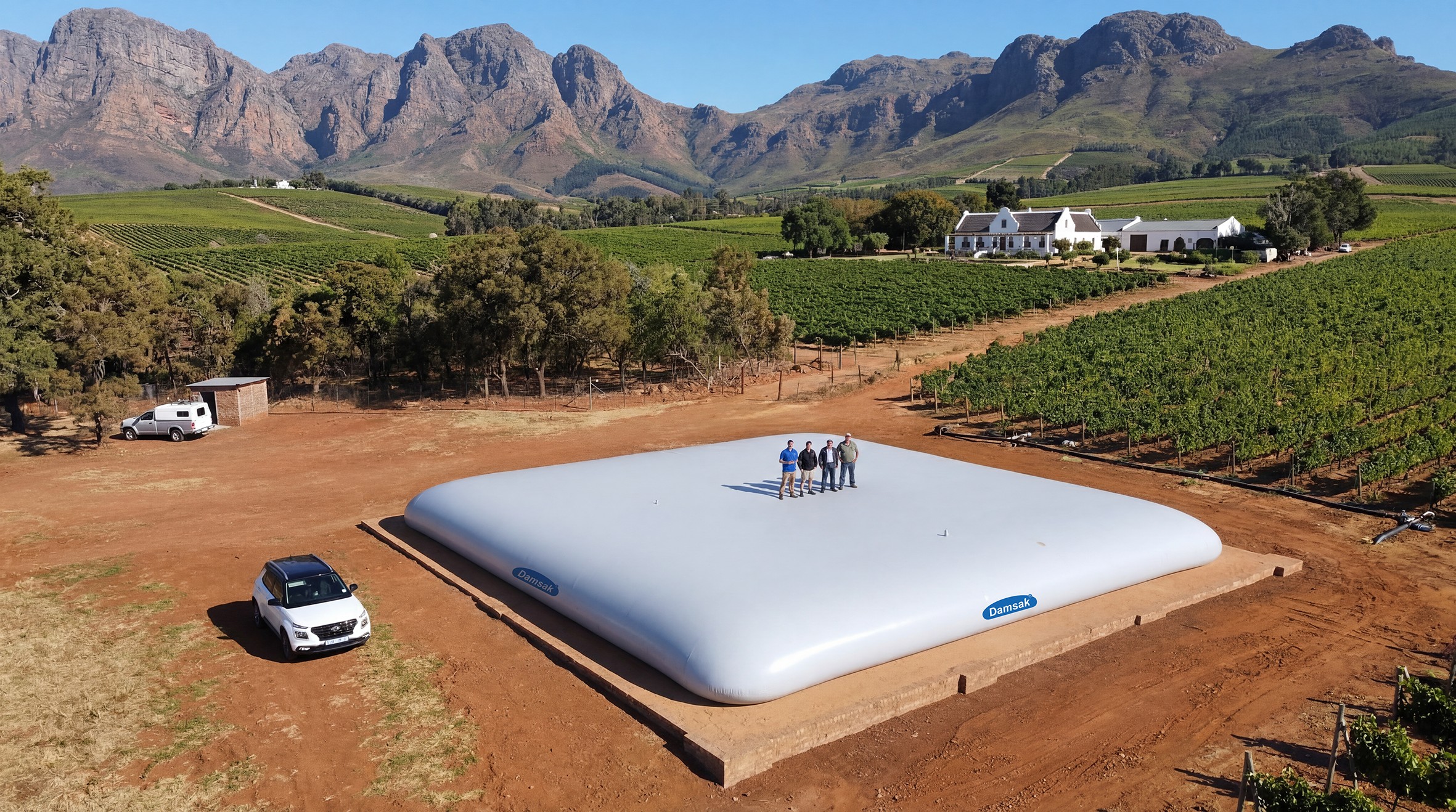
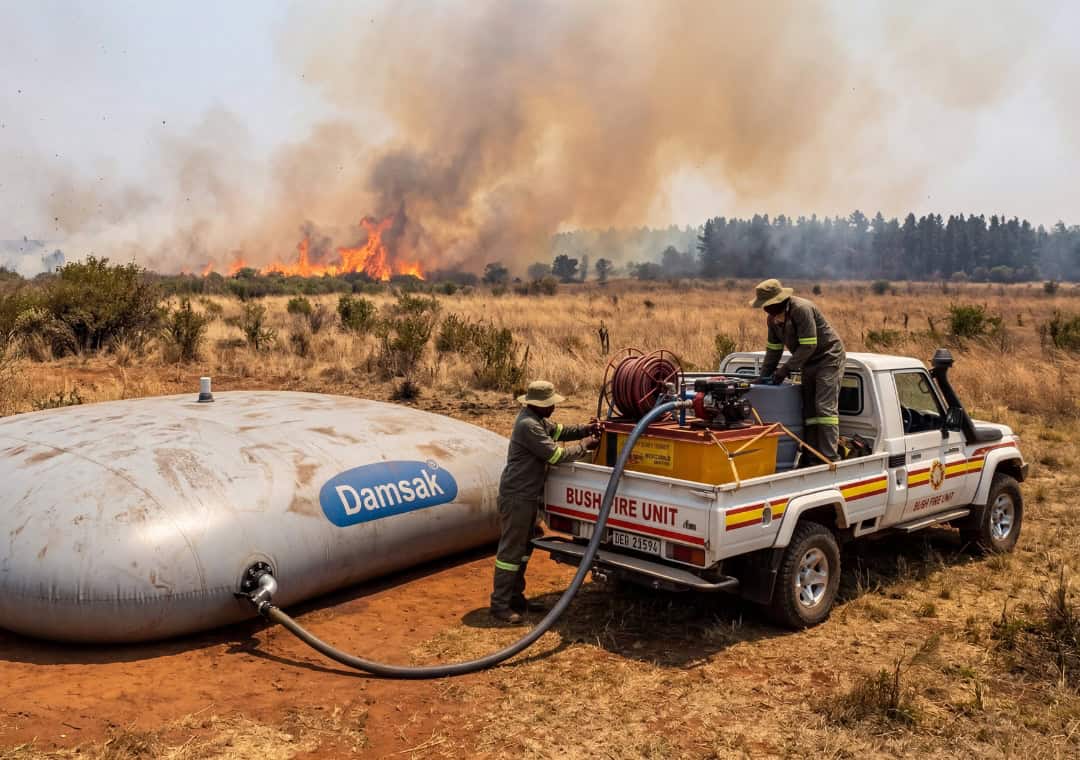
The combination of instant installation and long-term service is especially valuable for disaster management and proactive planning. The same unit that holds process or municipal water on an ordinary day becomes immediate emergency reserve when fire season hits, when drought deepens, or when supply is interrupted. Mines, factories, farms, hospitals, schools, residential estates and municipalities that keep Damsak® capacity on site are choosing preparation over reaction. Clean water already stored and protected, changes what a water shortage or fire damage actually costs. In practice it means essential services and communities can keep operating instead of waiting for tankers or emergency deliveries.
Because the product was designed and manufactured in South Africa for South African and African conditions – extreme heat, high evaporation, remote sites with limited infrastructure, and the constant need to scale or relocate storage – it has found natural application wherever those same pressures exist. The business has expanded beyond South Africa, carrying the same practical advantages into other demanding environments facing unreliable supply and rising water stress.
Gordon started with a simple need on a farm. Dawid and the team have turned that need into a scalable solution for operations, municipalities and communities that understand preparation is better than crisis response. The core idea remains unchanged: store the water when it is available, keep it protected, and have it ready the moment demand spikes or supply tightens.
In a season when fire risk is high and drought pressure is expected to intensify, the question is straightforward. Is the backup already in place, or will it still be on order when the taps start running dry or the fire approaches?